

A Comprehensive Guide to Transitions® Lenses for Driving

Content Manager
Introduction
Most people have faced the situation where their eyes temporarily go disoriented as they adjust from a bright environment to a dimly lit setting. This is often a problem for individuals who take the wheel frequently and spend hours travelling. In fact, this scenario poses a bigger problem for individuals with eyes sensitive to bright light.
Often, it becomes a hassle to keep eyes safe from being strained owing to transitioning from a dimly lit setting to bright outdoors or vice versa. To this problem, photochromic lenses are the choicest solution that permanently ends the hassle and makes the transition from a bright environment to a dim setting smooth.
Transitions® is one of the most recognised names in photochromic lenses, but many people still wonder how well they work behind the wheel. Since modern car windscreens block most UV light, do Transitions® lenses still make sense for drivers? And if you spend hours looking at a digital dashboard or find bright light uncomfortable, which option should you choose?
In this guide, I’ll answer these questions and explain how different Transitions® lenses perform while driving, so you can decide whether they’re the right fit for your everyday routine.
Do Transitions® Work Behind a Car Windshield?
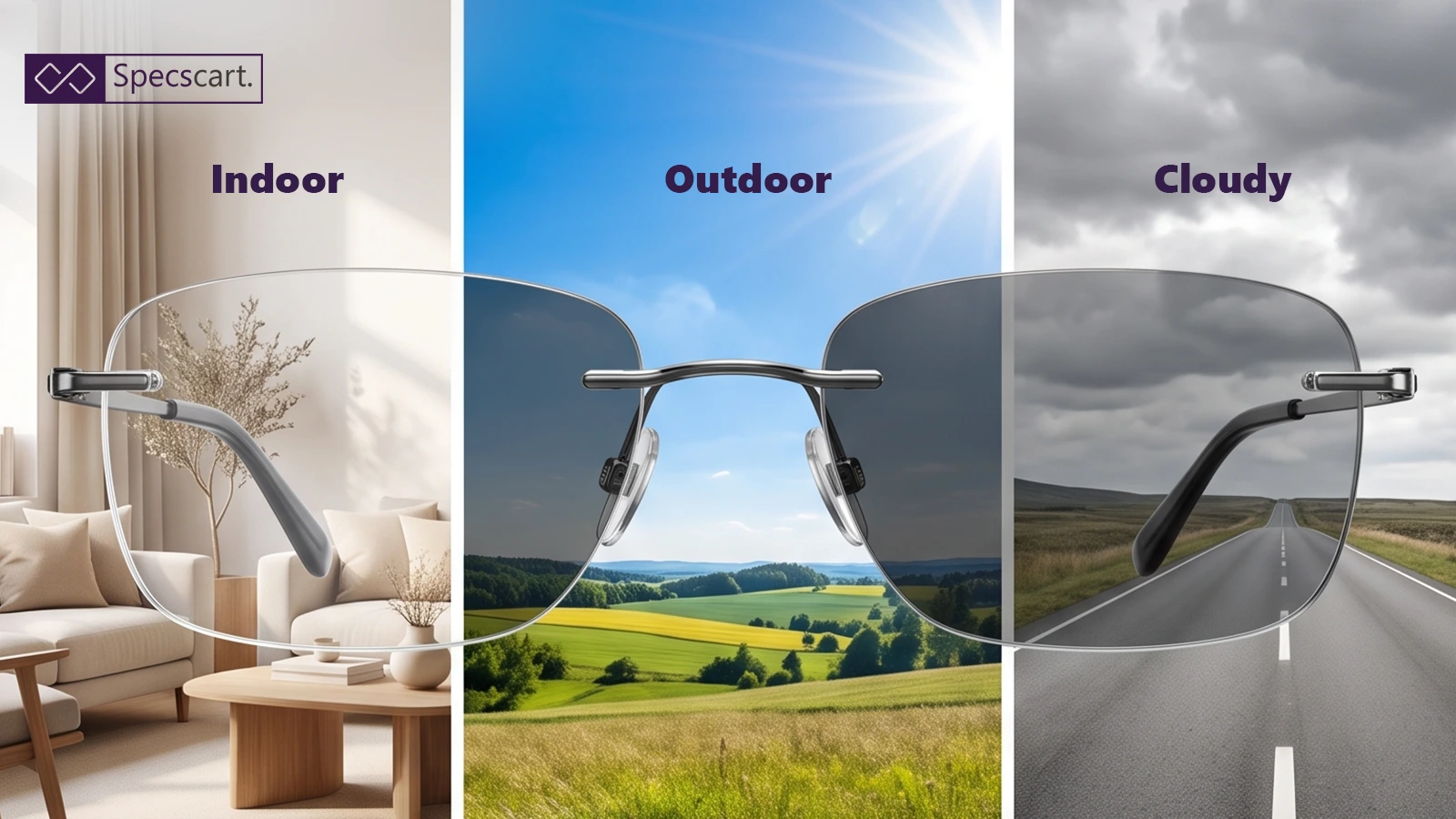
Yes, but it depends on which Transitions® lenses you choose. Photochromic lenses darken when they’re exposed to UV light. Standard Transitions® GEN S lenses rely mainly on UV light, and because modern car windscreens block most UV rays, they stay mostly clear while you’re driving. They still provide clear vision and UV protection, but they won’t become as dark as they do outdoors.
Transitions® XTRActive lenses work differently. In addition to UV light, they also react to visible light, allowing them to darken behind the windscreen during the day. This makes them a better choice if you spend a lot of time driving or find bright sunlight uncomfortable when you’re on the road.
Both Transitions® GEN S and XTRActive lenses block 100% of UVA and UVB rays and include built-in blue light filtering for everyday visual comfort. The main difference is how they perform in a car, which is why your lifestyle and driving habits can help determine which option is the better fit.
The comparison below highlights the key differences between Transitions® GEN S and Transitions® XTRActive, making it easier to choose the right lenses for your daily routine.
| Performance Feature | Transitions® GEN S™ | Transitions® XTRActive® |
|---|---|---|
| Best For | Everyday wear and people who frequently move between indoors and outdoors. | Frequent drivers and people who are more sensitive to bright light. |
| What Activates Them? | Reacts mainly to UV light. | Reacts to both UV light and visible light. |
| Performance Inside a Car | Stays mostly clear because the windscreen blocks most UV light. | Darkens while driving by responding to visible light as well. |
| Appearance Indoors | Completely clear indoors. | Clear with a subtle tint for added comfort. |
| Colour Options | Available in 8 colours: Sapphire, Ruby, Amber, Amethyst, Brown, Grey, Emerald and Graphite. | Available in Grey, Brown and Green. |
The Modern-Day Driving Scenario
The changing lighting conditions while driving and Transitions® adjusting accordingly are self-explanatory & do not require further explanation. However, some instances must be brought into light, considering the modern style of driving. You can understand how Transitions® lenses work to get a better understanding of the same. Next, you’ll get to understand how upgrading the lens technology can positively impact driving.
Reducing The Dashboard Glare
Whether EV or not, the new generation of vehicles is switching to LED instrument clusters and infotainment screens. Switching between screens and sunlit roads causes eye strain & fatigue.
This can be prevented with Transitions® XTRActive, which blocks UV rays & dampens the harsh output of high-contrast screens to minimise eye fatigue. They can be infused into the prescription glasses for supreme-level driving comfort.
Navigating Changing Light Conditions
Driving often means moving between bright sunlight and darker spaces, such as tunnels, covered car parks or tree-lined roads. These sudden changes in light can make it harder for your eyes to adjust, especially if you’re wearing sunglasses with a fixed dark tint.
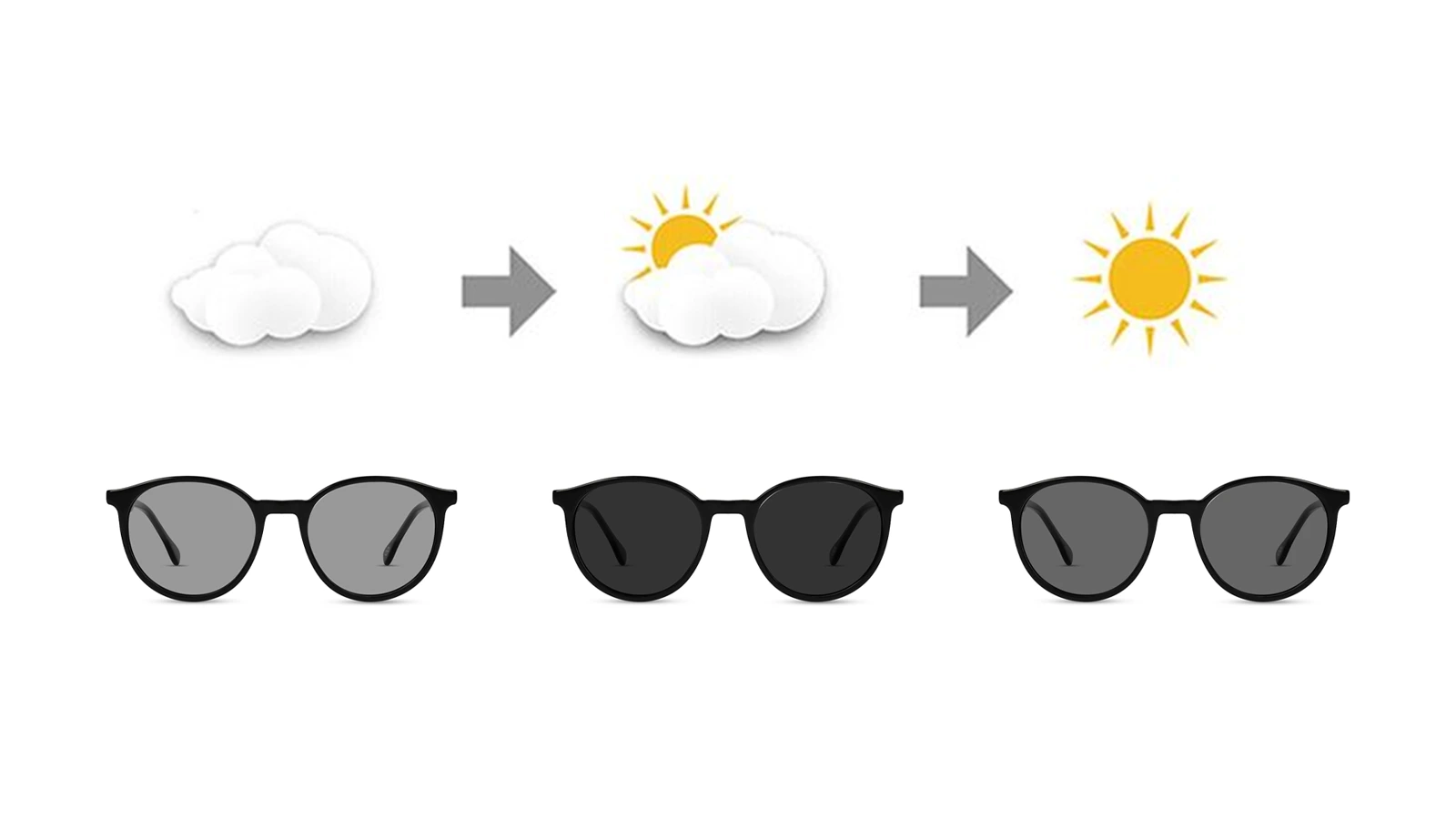
Transitions® XTRActive lenses adapt to changing light by responding to both UV and visible light. This allows them to provide extra shading in bright conditions while maintaining comfortable vision as the light changes, helping reduce glare and making the transition between different environments feel more natural. The result is a more comfortable driving experience, particularly on longer journeys or in constantly changing light.
Plummeting The Winter Glare
When sun rays bounce back from slippery or wet surfaces, like water or snow, they create a blinding reflection for motorists. This can cause a temporary visual disorientation, which could lead to an inability to read road signs.
In such scenarios, standard photochromic lenses cannot cut the glare, but XTRActive lenses can. They not only eliminate the glare but also block the horizontal rays, making them the ONLY light-adaptive lens to function behind the windshield.
These were a few modern-day solutions with Transitions® to make the driving experience comfortable. But this isn’t all; photochromic lenses have been beneficial to drivers with photosensitivity issues as well.
How are they a direct relief for photosensitivity? Read next.
Resolving Photosensitivity with Transitions
Bright lighting is beyond discomfort for individuals; it is a trigger for eye strain, fatigue, dry eyes, and, to some extent, neurological issues like migraine. Undoubtedly, this could be a painful ordeal for an individual. Transitions® lenses are very effective in such conditions as they adjust automatically depending on the lighting condition so that you don't have to switch between your prescription glasses and sunglasses.
Transitions® XTRActive shield the eyes from bright settings and UV light. Their tint automatically adjusts to different lighting conditions & prevents squinting or sudden visual shocks. Even when indoors, these lenses retain a protective tint. While fully deactivated, XTRActive lenses provide soothing relief to the eyes from fluorescent lighting.
All in all, it remains a win-win situation after turning to Transitions XTRActive for alleviating photosensitivity.
Sunglasses vs Polarised vs Transitions
Individuals must invest in the right eyewear instead of buying impulsively, so here’s a quick comparison between the three different categories.
| Feature | Standard Sunglasses (Tinted) | Polarised Sunglasses | Transitions® (XTRActive / GEN S) |
|---|---|---|---|
| Primary Purpose | Basic sun protection and aesthetic styling. | Advanced glare elimination (best for water, snow, and wet roads). | All-in-one dynamic convenience from indoors to outdoors. |
| How It Handles Light | Diminishes the overall environment equally. | Chemically filters out blinding horizontal light reflections. | Automatically adjusts tint darkness based on ambient light levels. |
| Performance Behind a Car Windshield | Retains a lighter tint; Reacts only to UV light. | Constant dark tint + eliminates dashboard reflections on the glass. | XTRActive New Generation darkens effectively behind the windshield. |
| Indoor & Night Utility | Too dark; unsafe for night driving or indoor use. | Too dark; unsafe for night driving or indoor use. | Retains a protective micro-tint (XTRActive) for full indoor/night safety. |
| Specscart Provision & Pricing | Tinting Option: Specscart offers standard dark tints (Grey, Brown, Green) with any prescription frame purchase. | Premium Add-on: Available as a specialised upgrade during lens customisation for a flat fee. | Premium Add-on: Available in the latest XTRActive® generations. |
| Included Coatings | Comes with Specscart’s standard UV400 coating. | Includes Specscart's standard premium UV400 protection coatings alongside the polarising film layer. | Inherently features built-in Blue-Light filtering and premium scratch/glare protection, with UV400 coating. |
| Best Suited For... | Casual, everyday sunwear for those who adore a tinted look. | Professional driving, beach holidays, fishing, and wet UK motorways. | Daily commuters, office workers, and anyone tired of swapping between two pairs of glasses. |
Conclusion
The brain perceives 90% of data through the eyes, and to make driving safe, the comfort level & light shouldn’t be compromised at any cost. Integrating the Transitions® technology into daily prescription glasses relieves the hassle of carrying multiple frames, as these lenses are ‘smart’ enough to adapt to different lighting conditions & assure a crystal clear vision.
That being said, the visual transition between environments becomes a breeze without letting the eyes feel the slightest strain. At Specscart, you can choose from 2000+ fashionable frames and integrate Transitions for a hassle-free drive at any hour of the day.
Caution: You may become style obsessed