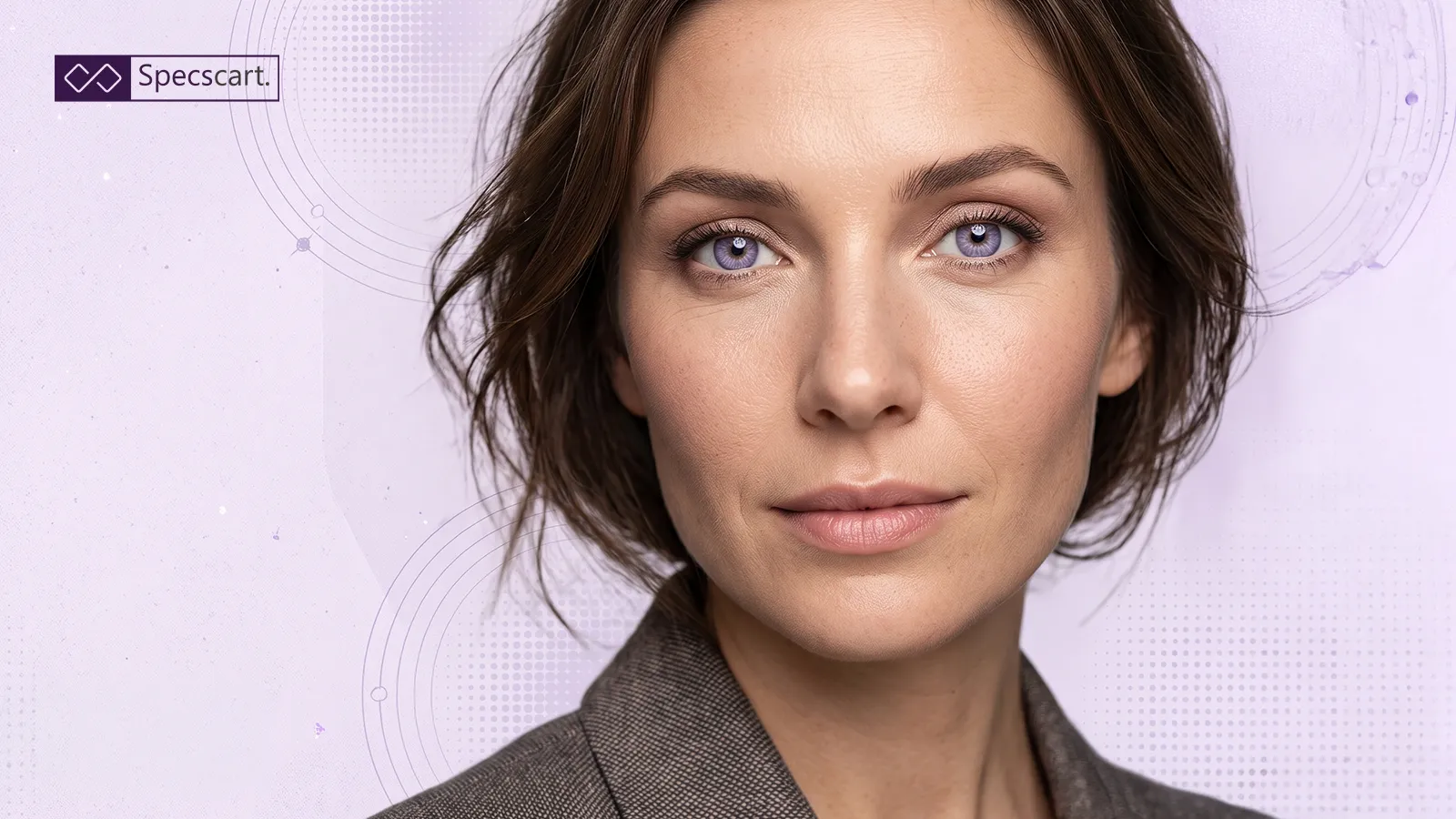

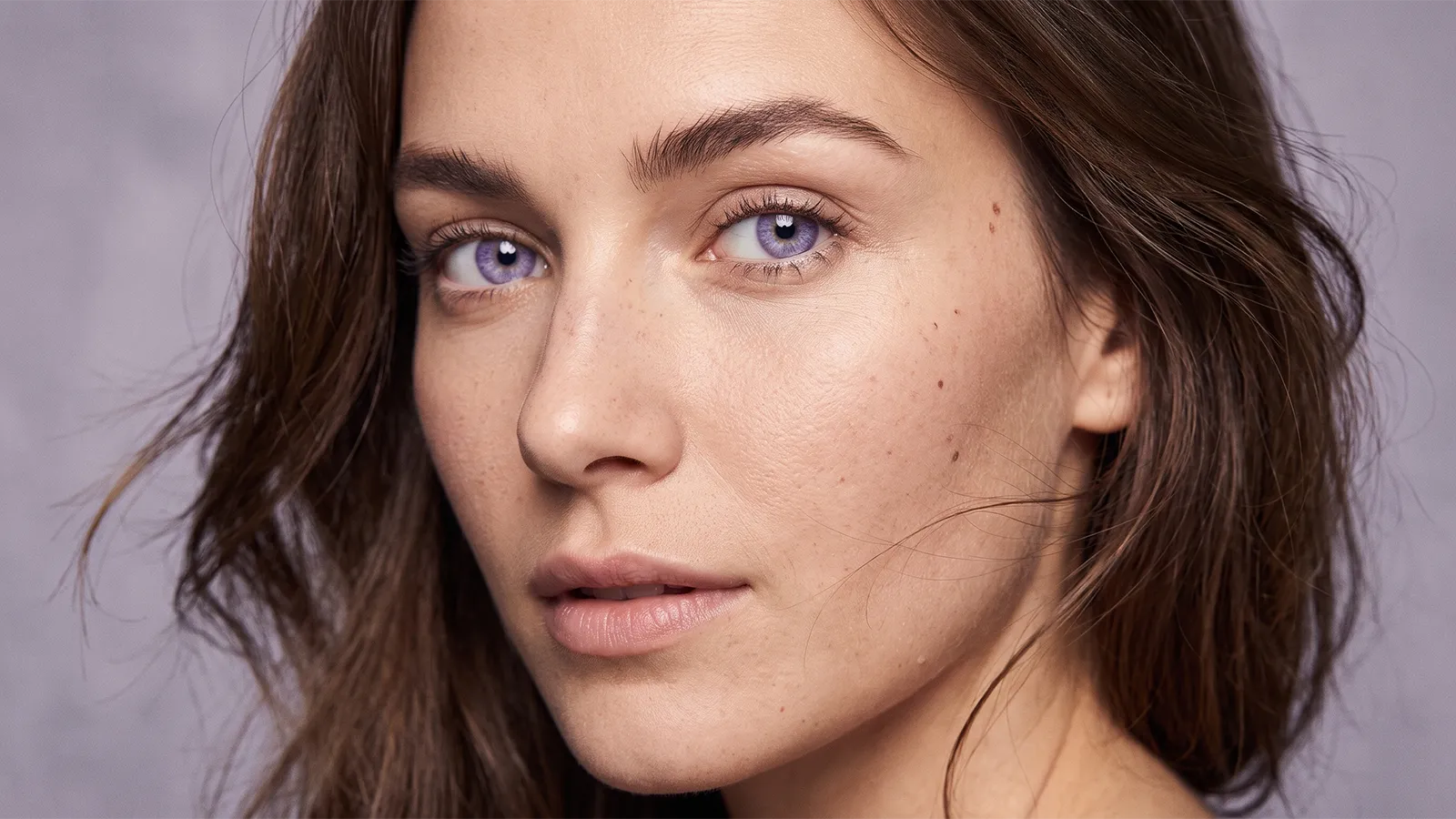
Purple or red eyes sound like something straight out of a fantasy film, and part of what makes them so fascinating is the science behind how they appear. If you've been reading up on the rarest eye colours in the world, you might have wondered whether purple or red eyes really exist or are simply the work of coloured contact lenses.
Their striking appearance has sparked curiosity, and more than a few myths, for years. So how do eyes end up looking red or purple, how rare is it, and what does science actually say about it? Let's find out.
The Science Behind Red and Purple Eyes
How does melanin in the iris affect eye colour?
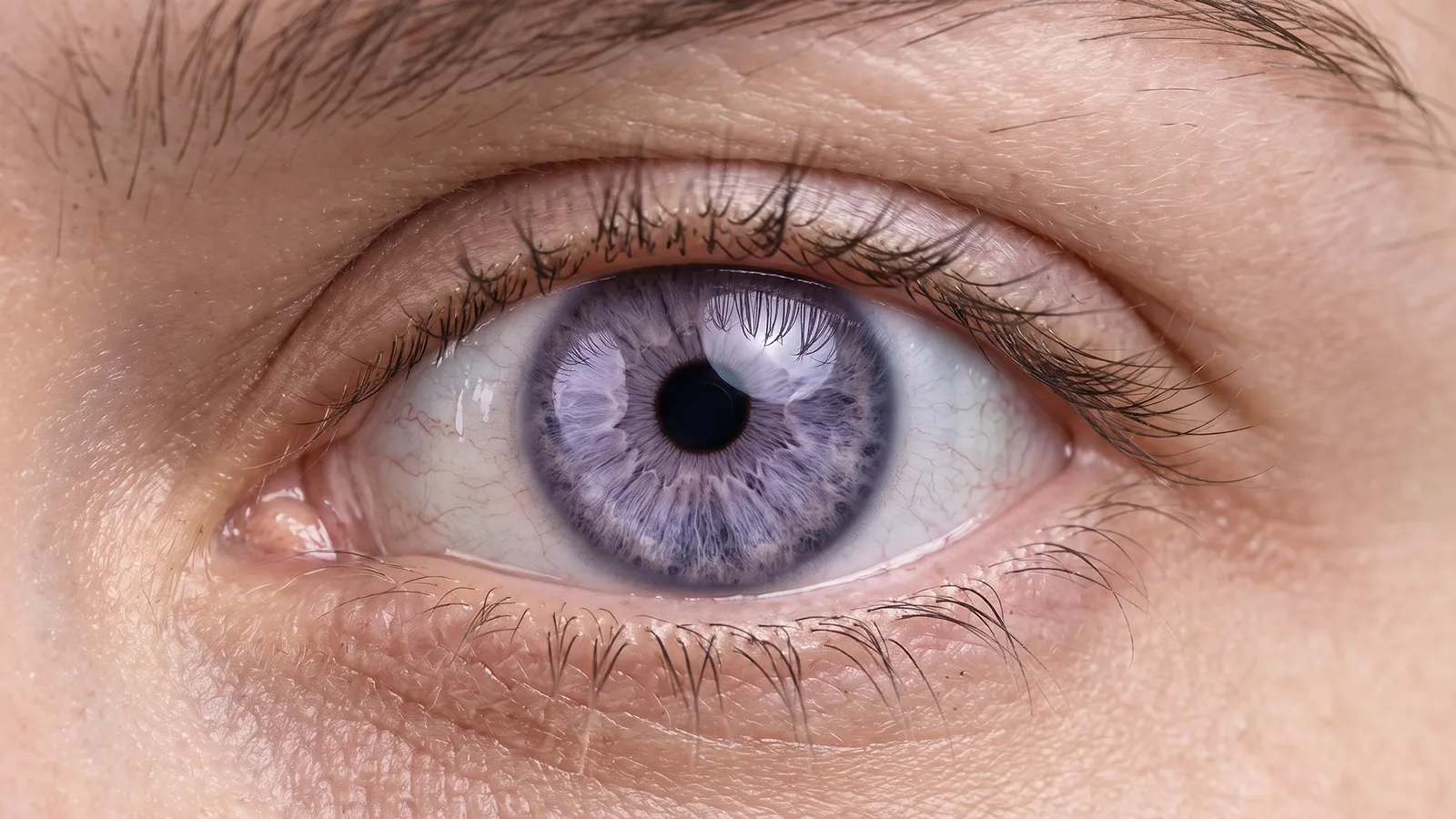
Melanin is the pigment that decides your eye colour. The iris has two main layers: the front layer, called the stroma, and a pigmented layer at the back called the iris pigment epithelium. In almost everyone, that back layer is packed with melanin, so it's the amount in the stroma that makes the difference. More melanin there gives you brown eyes, while less of it lets light scatter in a way that makes eyes look blue, grey or green. Eyes only start to look reddish or violet when there's very little melanin in both layers, which is rare and usually linked to albinism.
The role of genetics
Your DNA plays a major role in determining eye colour, so when it comes to unusual shades, genetics deserves a fair share of the credit. Two of the most important genes are OCA2, which helps produce and store melanin, and HERC2, which controls how strongly OCA2 is switched on. They don't work alone, though. Scientists have linked more than a dozen genes to eye colour, which is why it rarely follows the neat patterns we're taught at school.
How does light make eyes look red or purple?
Sometimes the way we see eye colour is just as interesting as the colour itself. When an iris has very little pigment, light passes through it and reflects off the blood vessels at the back of the eye, giving it a reddish or pinkish look. Mix a little of that red with the blue created by light scattering in a pale iris, and the eye can appear violet. It's the same reason eyes turn red in flash photos, where the camera's light bounces off the back of the eye and straight into the lens.
Lighting, makeup, clothing and surrounding colours can also shift how pale blue eyes appear, sometimes making them look closer to violet. You can find out more in our guide to facts about blue eyes.
Purple Eyes — Myth or Reality?
The truth about Alexandria's Genesis
Ever heard of a genetic condition that supposedly gives people purple eyes, flawless skin and extraordinary health? That's the story behind Alexandria's Genesis. It sounds fascinating, but there's a catch. It's an internet myth, not a medically recognised condition, and while it has picked up a sizeable following in online discussions over the years, there's no scientific evidence that it exists.
Can albinism make eyes look red or purple?
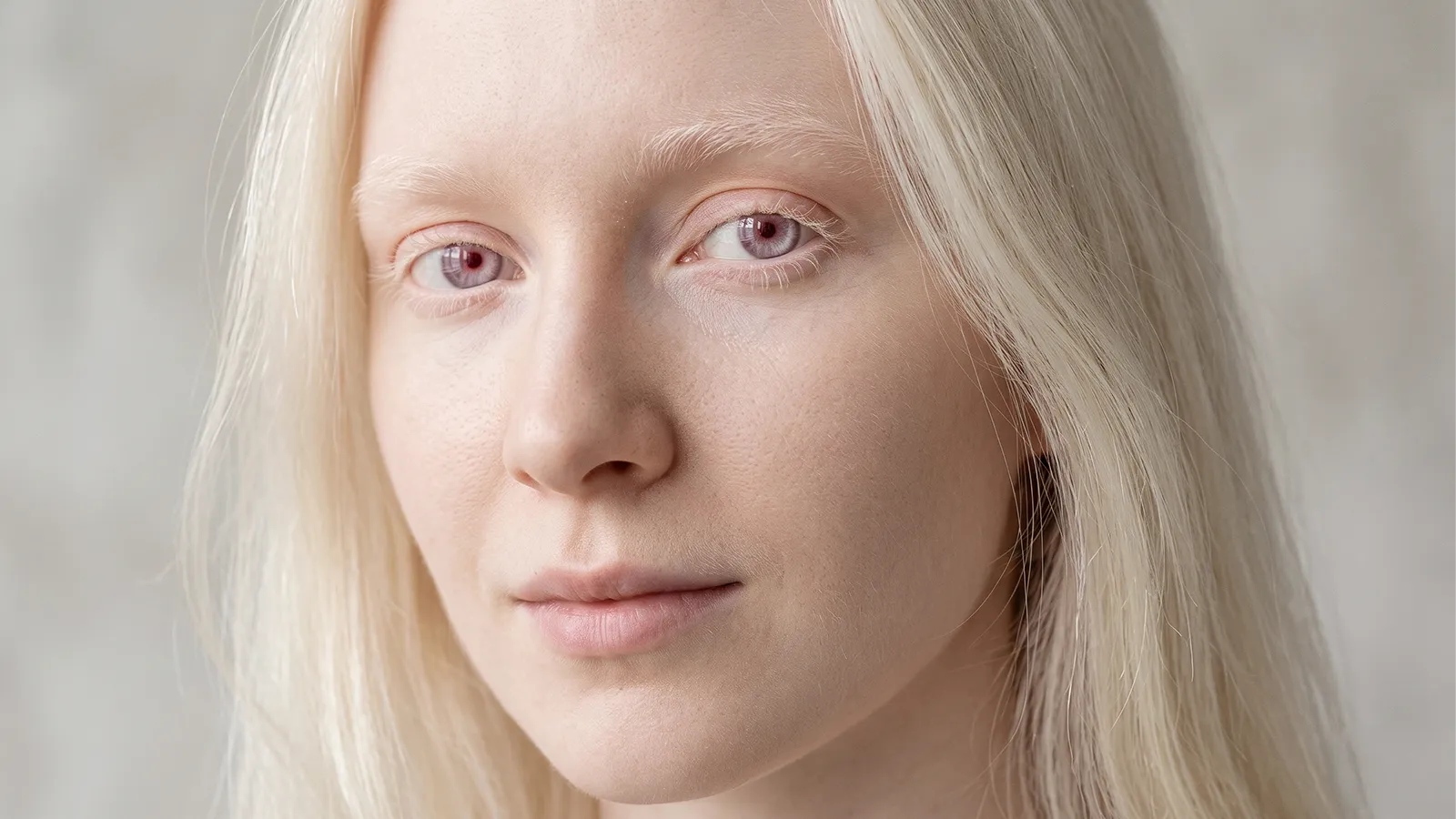
Albinism is real, but its effects are often misunderstood. It's caused by inherited genetic changes that reduce melanin production, which can leave the irises very lightly pigmented. Many people with albinism actually have blue or grey eyes, but in certain lighting, their eyes can look pinkish, reddish or even violet as light reflects off the back of the eye. Albinism also tends to affect vision in other ways, including sensitivity to bright light, which is worth keeping in mind when choosing glasses (more on that below).
How Rare Are Purple Eyes?
Purple eyes are often described as one of the rarest eye colours, but there's no reliable scientific figure showing how many people have them. According to BBC Science Focus Magazine, around 1% of respondents in a 2014 eye-colour survey selected a category outside brown, blue, hazel and green. That’s the only reliable source I could find, and it’s more than 12 years old at the time of writing this article.
That doesn't mean 1% of people have purple eyes, though. Pale blue irises can look violet under certain lighting, while very low pigmentation can create a reddish or pinkish appearance, so most "purple eyes" are really a mix of pigment, light and perception.
Medical Conditions That Can Change Eye Colour or Appearance
None of these conditions turns eyes purple, but each can change how the colour of one or both irises looks, which is why they're worth knowing about.
Horner's Syndrome: When present from birth, it can cause one iris to appear lighter than the other.
Iris Melanoma: This rare cancer can show up as a new or growing dark spot on the iris, making its colour look uneven.
Pigment dispersion syndrome and pigmentary glaucoma: Pigment released from the back of the iris can cause patchy changes in its appearance.
Waardenburg Syndrome: This genetic condition can cause unusually pale blue eyes or irises of two different colours.
Fuchs Heterochromic Uveitis (FHU): Long-term inflammation can cause pigment loss, making the affected iris look lighter than the other.
Elizabeth Taylor and the Purple Eyes Story
For years, Elizabeth Taylor's striking eyes sparked curiosity, with many people believing she had naturally purple eyes. In reality, her eyes were a deep blue that could look violet in photographs and on screen. Lighting, makeup, clothing and film all played their part, and she was also born with a double row of eyelashes, a rare condition called distichiasis, which made her eyes stand out even more.
So while her eyes certainly looked purple in some pictures, there's no reliable evidence that her irises were naturally violet. If anything, her famous eye colour is a great example of how much perception shapes what we see.
What Colour Glasses Suit Red or Purple Eyes?
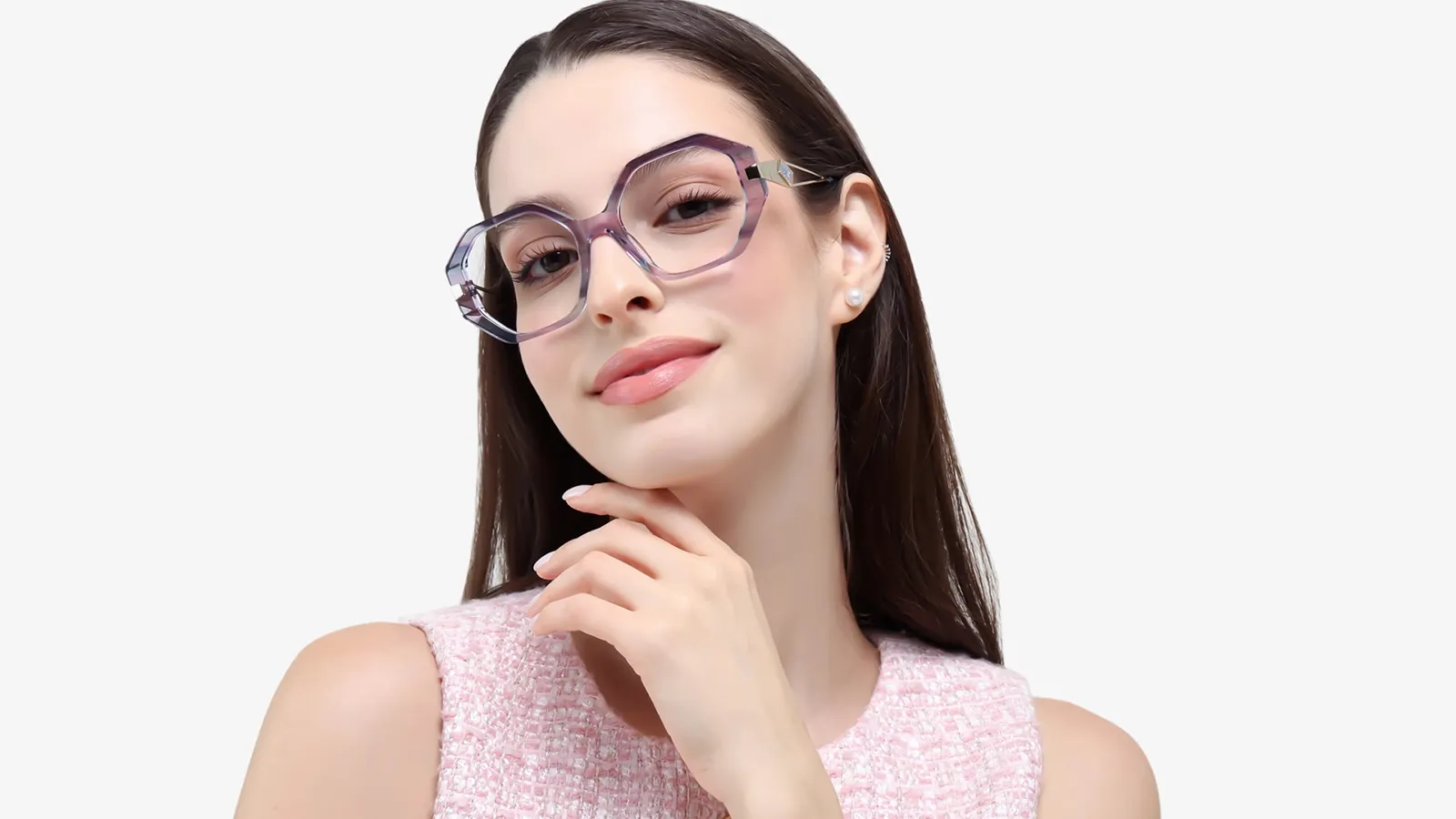
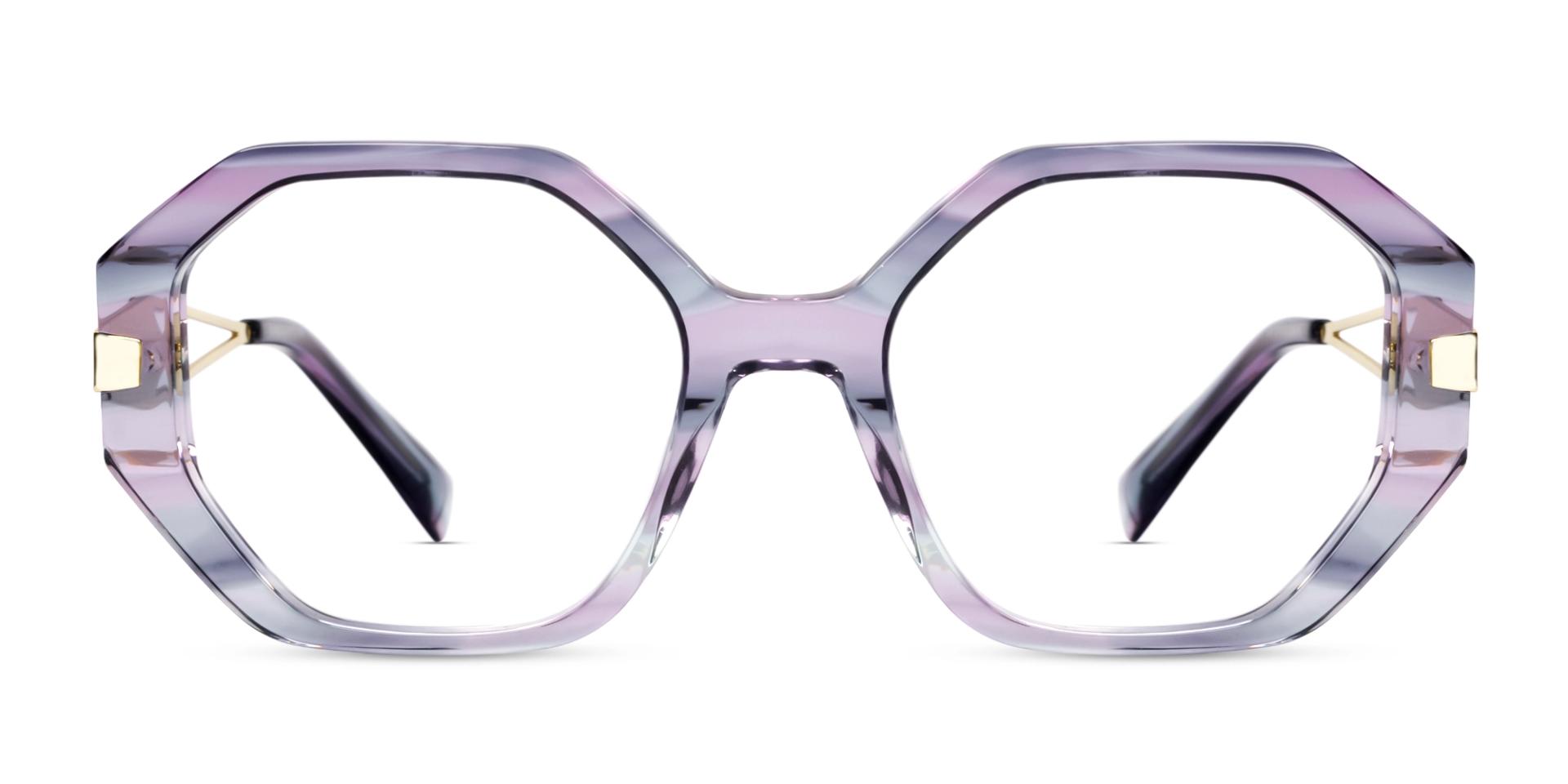
Glasses colours that complement purple eyes
Choosing frames that complement your eye colour can help bring out its natural tones, and for violet-looking eyes there are a few easy routes. Frames in lilac, lavender or deep violet echo the colour directly, while neutral tones like silver, grey or transparent frames let your eyes do the talking. If you'd like something subtler, pastel shades such as soft pink, baby blue or pale purple add a gentle touch of colour without competing. For more ideas, have a look at our guide to choosing glasses frames for different eye colours.


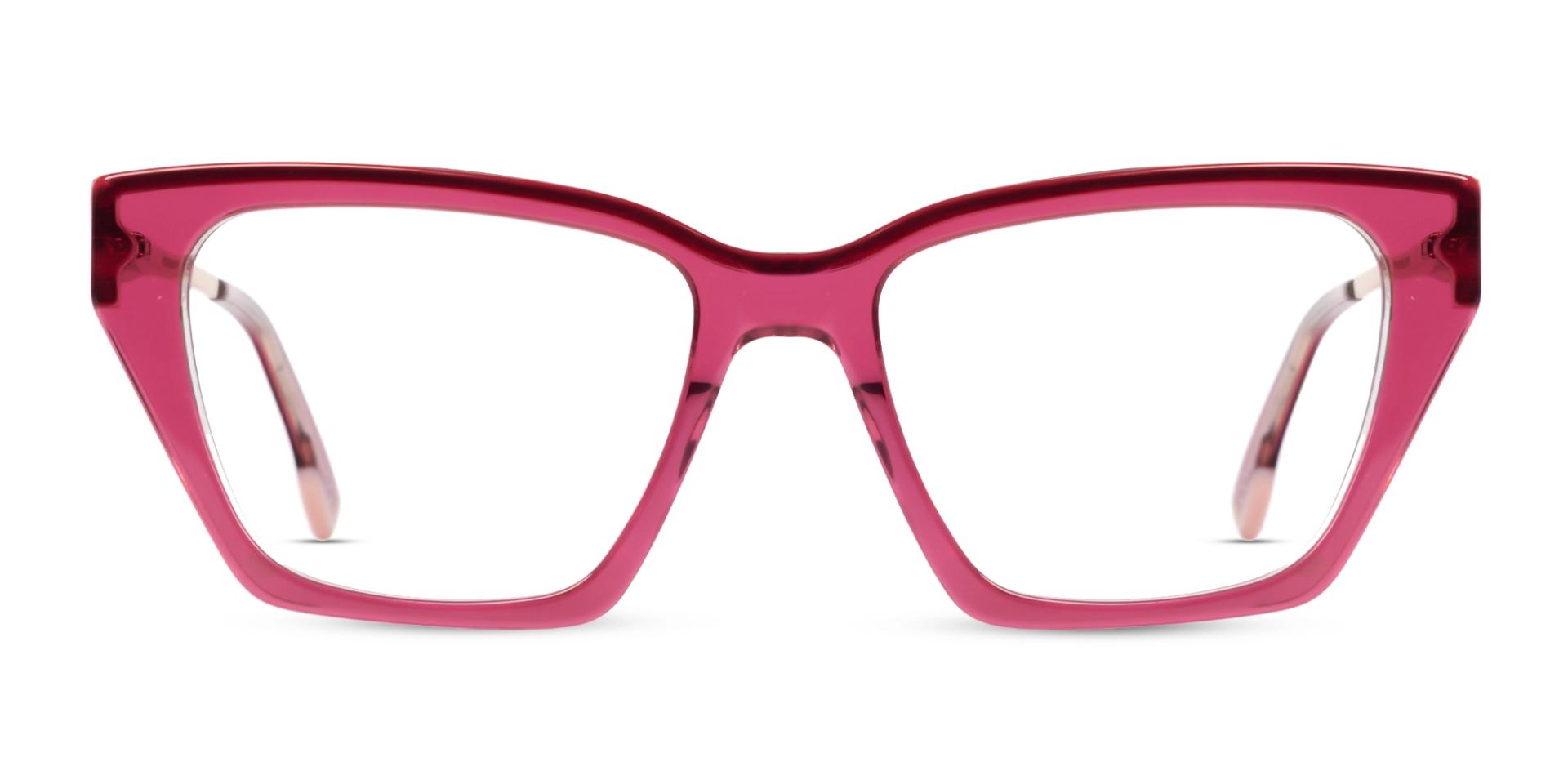




Glasses colours that create contrast
Contrast is the other way to go. Warm tones like amber, gold and copper add a bit of glow next to purple eyes, while rich greens, deep burgundy and navy bring more drama and character to the overall look. And if you'd rather keep it classic, black or white frames give eyes this distinctive a clean, confident backdrop.


Wrapping It Up
Red and purple-looking eyes show just how much melanin, genetics and lighting shape the way we see eye colour. Most unusual shades have a simple scientific explanation, but a sudden change in the colour of your iris can signal an underlying eye condition and is always worth getting checked by an eye-care professional. And if these striking shades have inspired you, take a look through our range of glasses to find frames that suit your eye colour and personal style.
Caution: You may become style obsessed