What Determines Eye Colour? Genetics, Rare Shades and Heterochromia

Content Manager
Eyes are windows to the soul and, undoubtedly, one of nature’s most wonderful creations. From earthy brown tones to gleaming green shades, and from azure blue to golden amber, every iris tells its own story.
The aesthetics of human eyes have been praised in poetry, and the science behind eye colour is just as fascinating. Let’s take a closer look at the spectrum of human eye colours and what makes them differ from person to person.
What Determines the Colour of Your Eyes?
The colour of human eyes is a polygenic trait. In simpler words, the colour of your eyes is determined by multiple genes, which include HERC2 and OCA2. These genes play a key role in determining the amount & distribution of melanin in the iris. No single gene is responsible for determining the colour of eyes.


A higher amount of melanin in the iris gives a darker colour, whereas less melanin gives your eyes a lighter colour. However, this doesn’t mean children will always inherit the same eye colour as their parents. Because several genes are involved, a child can end up with a different shade, such as blue or green, depending on the combination of gene variants they inherit.
What Are Different Natural Eye Colours
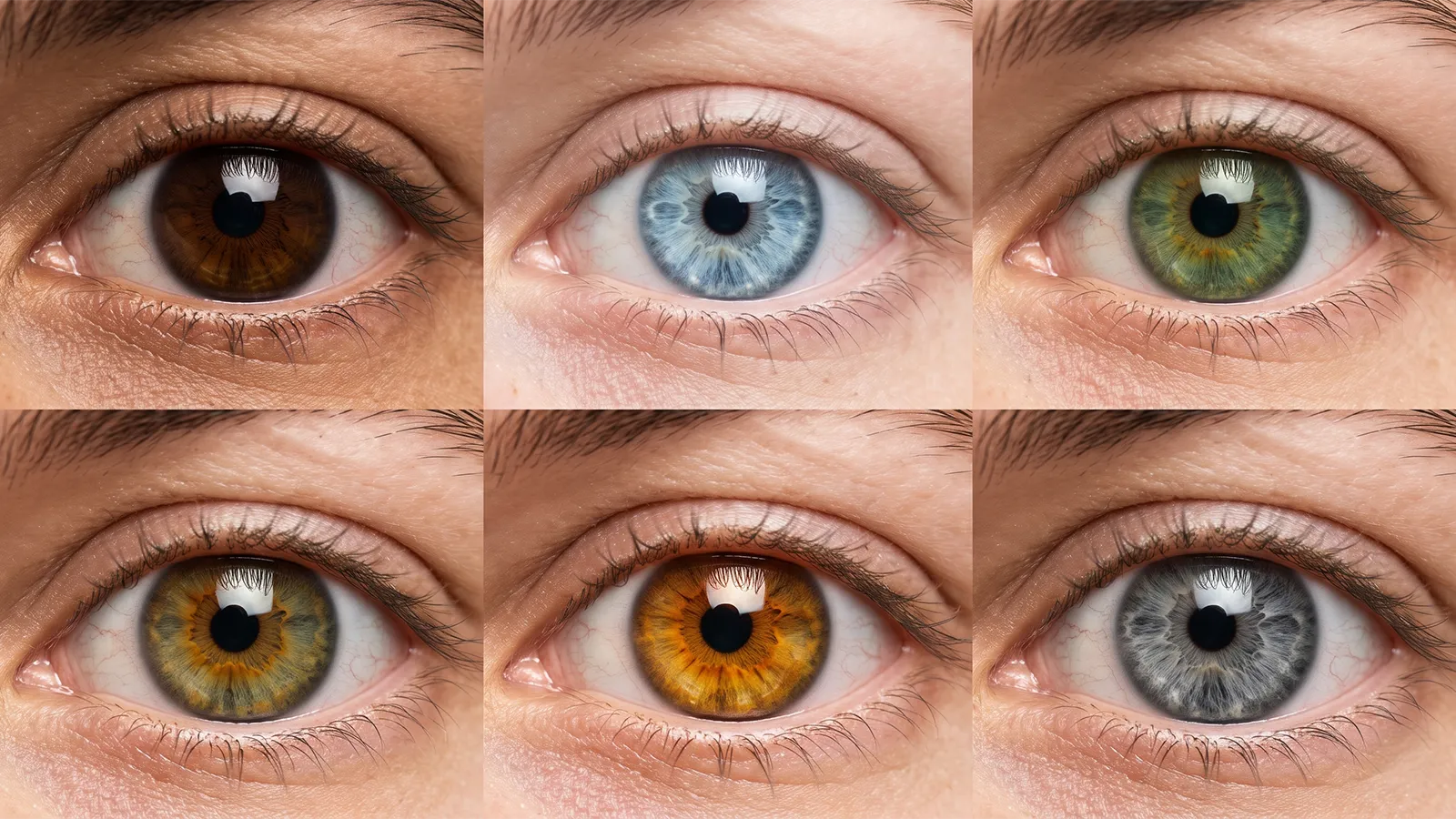
Your eye colour depends on how much melanin is in the iris and how it’s distributed. You inherit the genes that control this from your parents, but that doesn’t guarantee you’ll have the same colour as either of them. Brown irises have more melanin than blue, green or grey eyes.
The way light scatters in the front layer of the iris, called the stroma, also plays a part. In eyes with less melanin, this scattering has a bigger effect on the colour you see, which is why lighter eyes can look slightly different depending on the light.
Green Eyes: Why Are They So Rare?
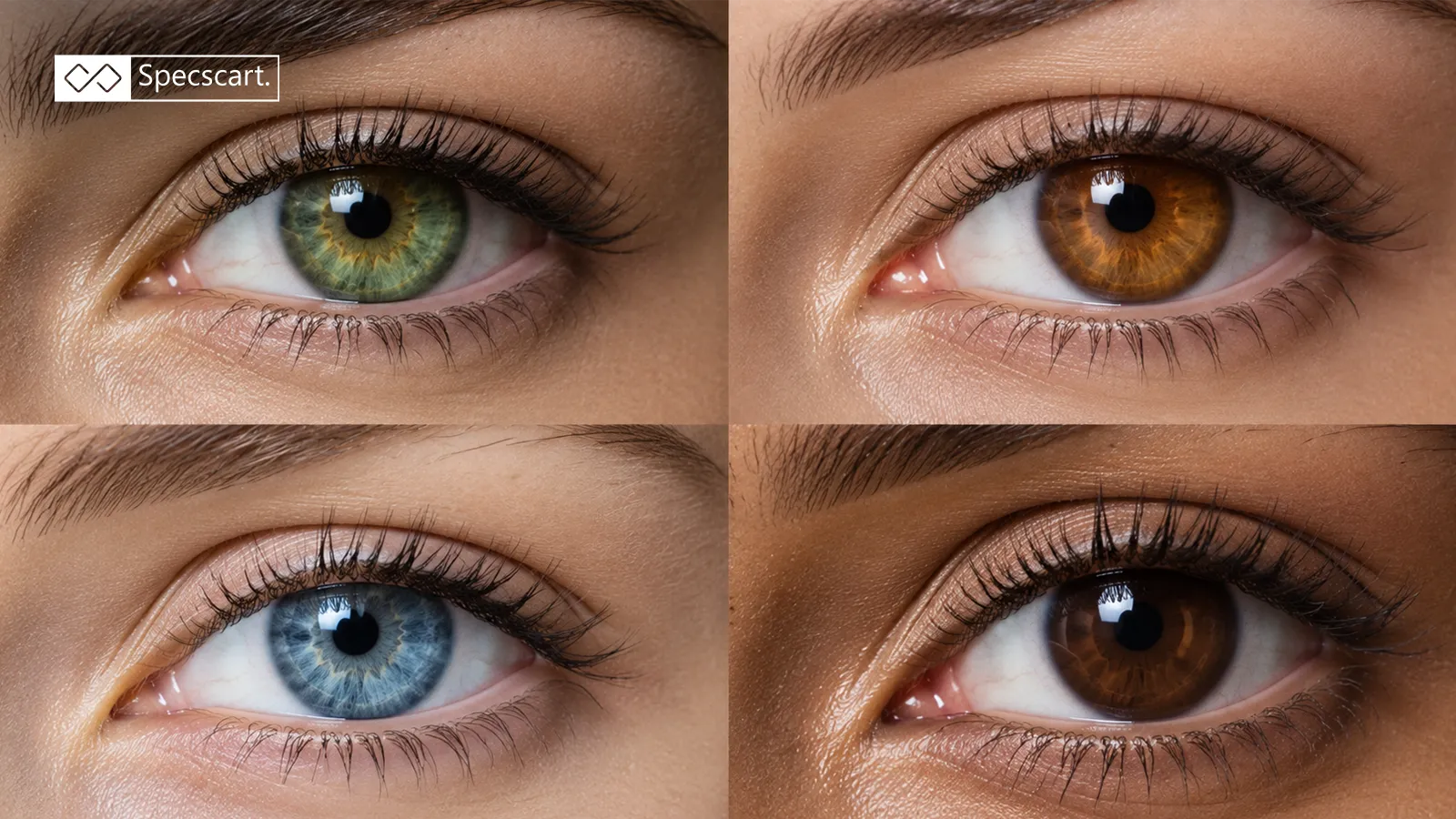
Green eyes are one of the most fascinating eye colours, and they’re commonly estimated to occur in only around 2% of the world’s population. Green eyes have a low to moderate amount of melanin, with a higher share of the yellowish pigment pheomelanin. When light scatters in the iris, it creates a bluish tone, and that blue blends with the yellowish pigment to make the iris look green.
Grey Eyes: Are They Rarer Than Green Eyes?
Grey eyes are uncommon, but reliable global figures are hard to find because studies often group them with blue eyes, so it’s difficult to say for certain whether they’re rarer than green. Like blue eyes, grey eyes have very little melanin in the iris. One widely cited explanation for their silvery look is that the iris contains more collagen, which scatters light more evenly and gives a grey rather than blue appearance.
Blue Eyes: How Does Low Melanin Affect Eye Colour?
Blue eyes are the result of a genetic variation in the HERC2 gene that reduces the activity of the neighbouring OCA2 gene. As OCA2 helps produce melanin, less of it ends up in the iris. When light enters the iris, the shorter blue wavelengths scatter the most, giving the eyes their blue appearance.
Hazel Eyes: Why Do They Look Different in Different Lighting?
Hazel eyes usually combine brown or golden tones around the pupil with green towards the outer edge of the iris. Hazel eyes have a moderate amount of melanin that’s spread unevenly across the iris. As a result, different lighting brings out different tones, making them look greener in some settings and more brown or golden in others.


Amber Eyes: How Are They Different From Hazel Eyes?
People often confuse amber eyes with hazel or light brown eyes. Unlike hazel eyes, which mix brown, gold and green, amber eyes usually have a uniform golden or copper colour across the whole iris. This comes from a relatively low amount of eumelanin, the dark brown pigment, and a higher proportion of the yellowish pigment pheomelanin. In bright sunlight, amber eyes can look even more golden or coppery.
Brown Eyes: Why Are They the Most Common?
Brown is the most common eye colour worldwide. It was also the original eye colour of early humans, while lighter shades like blue and green appeared later through genetic variations. The irises of brown eyes contain a higher amount of melanin, which gives them their darker colour.
Can People Naturally Have Red or Violet Eyes?
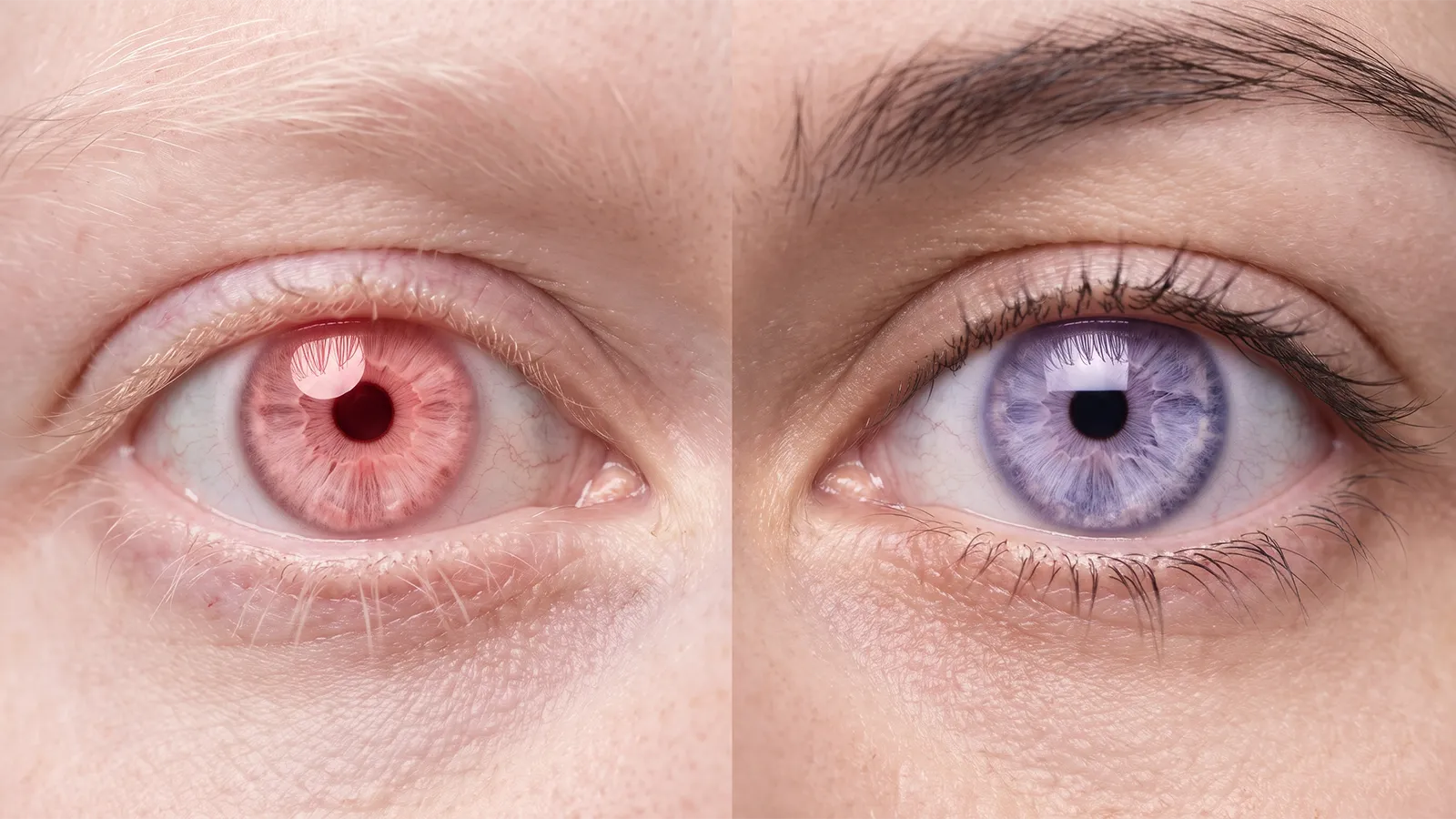
You might have noticed people’s fascination with violet or red eyes, like those of the vampires in the Twilight series. While this look can be achieved with cosmetic contact lenses, naturally red, violet or pink eyes are very rare.
Albinism is a genetic condition that reduces the production of melanin, and it can affect the skin, hair and eyes. When the iris has very little pigment, more light passes through it and reflects off the blood vessels at the back of the eye, which can make the eyes look pink or red in certain light. Most people with albinism have blue, grey or light brown eyes, though. Violet eyes are sometimes described when this reddish reflection mixes with a blue iris, but violet isn’t an established natural eye colour.
What Is the Difference Between Rare Eye Colours and Heterochromia?
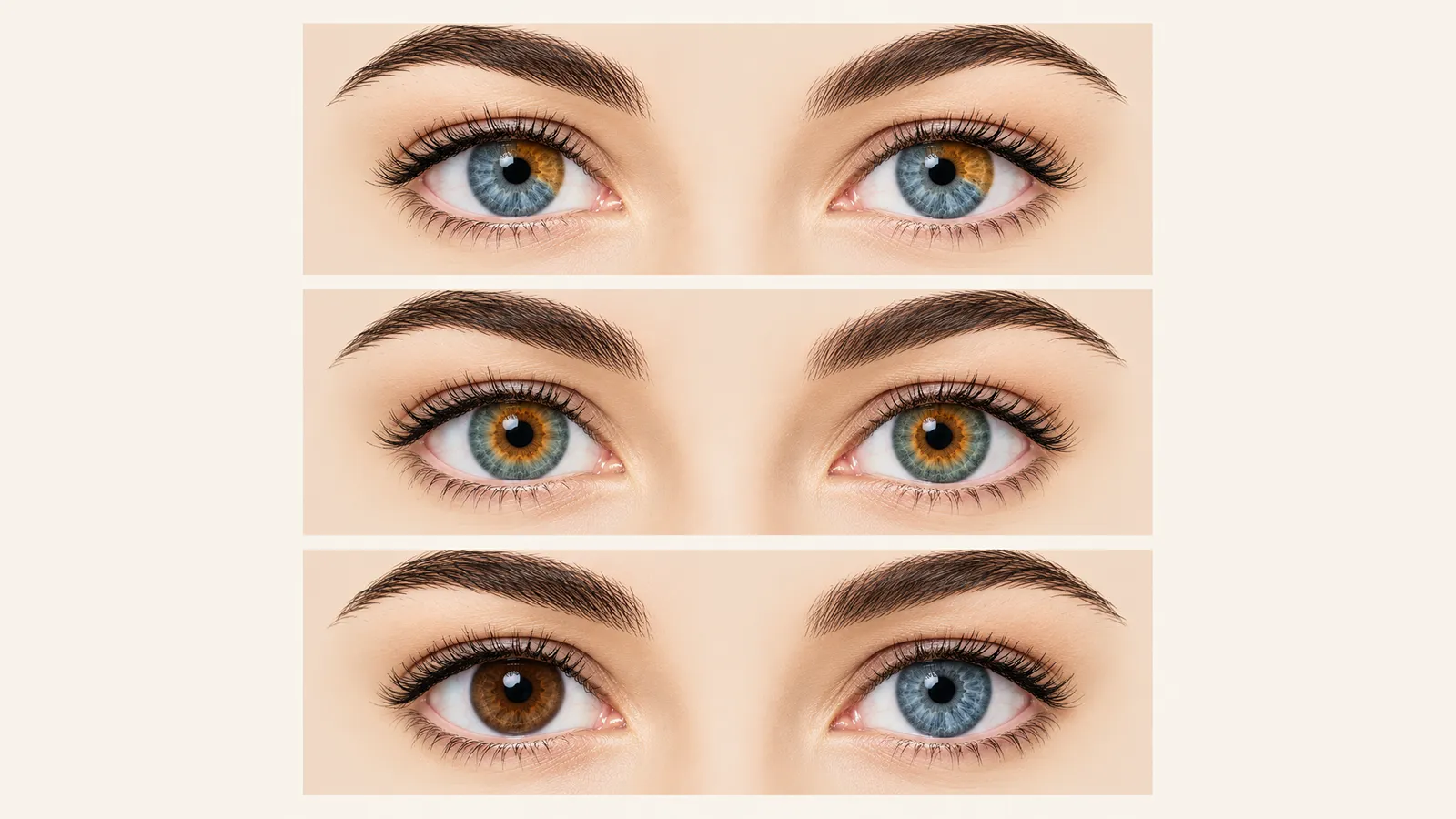
Heterochromia is a condition in which the two irises are different colours, or one iris has areas of different colour. It’s usually present from birth, and in these cases it’s generally harmless and doesn’t affect vision. Heterochromia can also develop later in life because of injury, inflammation, certain medications or other eye conditions, so a new change in eye colour should always be checked by an optometrist.
Heterochromia is of three types, which are described below:
Complete Heterochromia: An individual with complete heterochromia has different coloured irises. This condition is quite significant & can be recognised easily.
Partial/Segmental Heterochromia: This condition occurs within one eye. A spot in the iris appears differently compared to the rest of the eye.
Central Heterochromia: Central heterochromia is where the area around the pupil is a different colour from the outer part of the iris, forming a ring of contrasting colour.
Now, back to the question: what’s the difference between rare eye colours and heterochromia? A rare eye colour describes the overall shade of the iris, while heterochromia describes a difference in colour between the two eyes or within one eye. The confusion usually comes from central heterochromia. Because it often appears in both eyes, it can look like a single unusual eye colour, when in fact it’s quite common and is often what gives hazel eyes their mix of colours.
Can Your Eye Colour Change Over Time?
Many babies are born with lighter eyes that darken during the first year or two as melanin production in the iris develops. Once this settles in early childhood, eye colour usually stays fairly stable for life. More melanin gives darker shades, while less melanin gives lighter shades.
In adults, certain eye drops used to treat glaucoma, known as prostaglandin analogues, can gradually darken the iris, and this change is usually permanent. Some eye conditions can also affect iris colour, such as Fuchs heterochromic iridocyclitis, a type of eye inflammation that can lighten the affected iris, and pigment dispersion syndrome. As a new or sudden change in eye colour can be a sign of an underlying problem, it’s worth getting it checked by an optometrist.
Why Do People With the Same Eye Colour Have Different Iris Patterns?
Iris patterns and fingerprints have something in common: they’re unique to each person. Even identical twins don’t share the same fingerprints, and in the same way, no two people have been found to have the same iris pattern, even when their eyes are the same colour. Even your own left and right irises are different.
The pattern of the iris forms during foetal development. As the iris tissue grows in the womb, its fibres and folds develop in a largely random way, which is why every pattern turns out different. The pattern then stays stable for most of your life, which is a key reason iris scans are used in biometrics to tell people apart.


Conclusion
Human eye colours are shaped by a fascinating combination of genetics, melanin, and the way light interacts with the iris. From deep brown and golden amber to green, grey and blue, every shade has its own distinctive appearance.
While natural eye colour is largely determined by genetics, the right eyewear can help you express your personal style. Explore Specscart's collection of glasses frames to find a look that complements your eyes and feels uniquely yours.
FAQs
Can two brown-eyed parents have a blue-eyed child?
Yes, it is possible. Eye colour is influenced by multiple genes, including HERC2 and OCA2, so two brown-eyed parents can have a child with blue eyes, although brown eyes are more likely.
What is the rarest natural eye colour?
Green is commonly cited as one of the rarest main natural eye colours, occurring in around 2% of the world's population. Grey eyes are also uncommon, but reliable global comparisons are limited.
What is the difference between hazel and amber eyes?
Hazel eyes usually combine brown, gold and green tones, while amber eyes tend to have a more uniform golden, yellowish or coppery appearance. Lighting can affect how both colours look.
Can your eye colour change as you get older?
Eye colour can change during infancy as iris pigmentation develops. Later changes are less typical and may be associated with certain medications, eye conditions or injury. A new or sudden change should be assessed by an eye-care professional.
What causes heterochromia, or two different-coloured eyes?
Heterochromia occurs when the two irises have different colours or when one iris contains distinct colour variations. When it’s present from birth, it’s usually caused by differences in how much melanin develops in each iris, and it’s generally harmless. It can also develop later in life due to factors such as injury, inflammation, eye disease or certain medications, so a new change should be checked by an optometrist.
Can people with albinism have red or violet eyes?
People with albinism often have light-coloured eyes, including blue, and some may have pinkish or reddish eye appearances when iris pigmentation is extremely low. Violet eyes are not a typical or established outcome of albinism.
Caution: You may become style obsessed