



Most people don’t wake up one day to realise that they need varifocals. It happens gradually, and for a while, they’re able to convince themselves that they’re managing fine. You tilt the screen slightly, move to a brighter spot to read the menu, or just accept that mornings take a little longer because you're hunting for the right pair of glasses. However, it only gets worse with time, and you reach a point where you can see its impact on your daily life. It eventually happens to everyone. The question I am going to answer today is, when does it make sense to move to varifocal lenses?
What's Actually Happening to Your Eyes
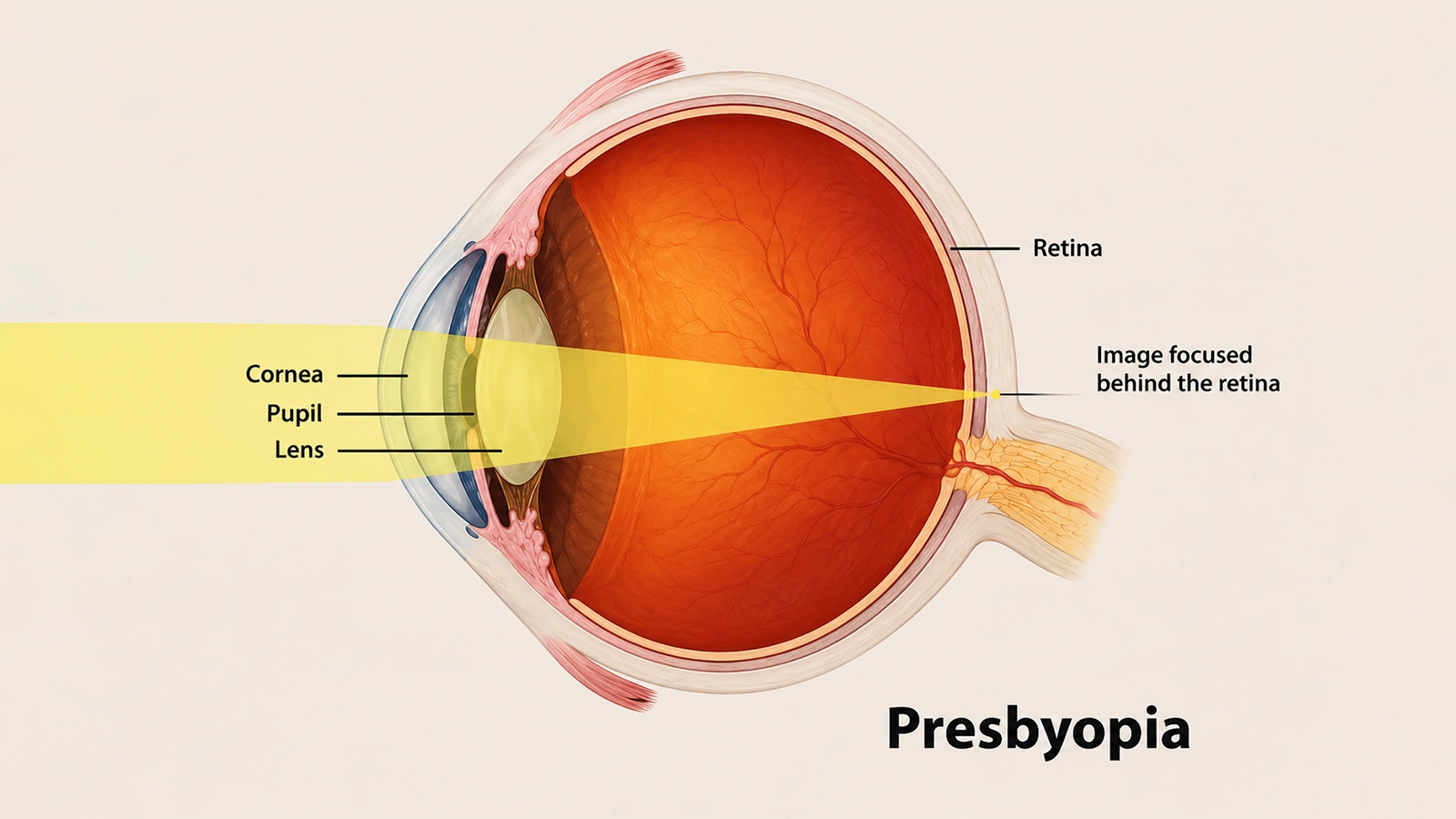
Your eyes have a flexible lens that changes shape to focus on objects at different distances. As you enter your early 40s, that lens gradually starts becoming stiffer and loses its flexibility. That makes shifting focus at different distances more difficult, especially at close distances. This is called presbyopia, and it happens to virtually everyone eventually.
The important thing to understand is that presbyopia progresses in stages. It your early 40s, you might notice it occasionally in some situations like poor lighting, tired eyes, or the end of a long day. It might get worse with time by your mid 40s, when you might not be able to ignore it. There is no particular age when it starts for everyone, and it depends on individual circumstances as well. Whether you need varifocal lenses depends on multiple factors, including at which stage of presbyopia progression you’re currently.
When Reading Glasses are Good Enough

Reading glasses are genuinely the right choice for some people, and there's no need to upgrade if they're working well for you. If your distance vision is fine and you only need help with close-up tasks like reading labels or checking your phone, a pair of reading glasses is good enough for you.
When Do You Need Varifocal Glasses

The situation changes when you need vision correction at more than one focal distance. If you already need distance glasses and now struggle to read without taking them off, you can already understand the struggle. Switching between two different glasses throughout the day is not a minor inconvenience. Especially if you see over weeks and months, it adds up to a lot of interrupted moments. That's typically the first clear sign that varifocals make more practical sense.
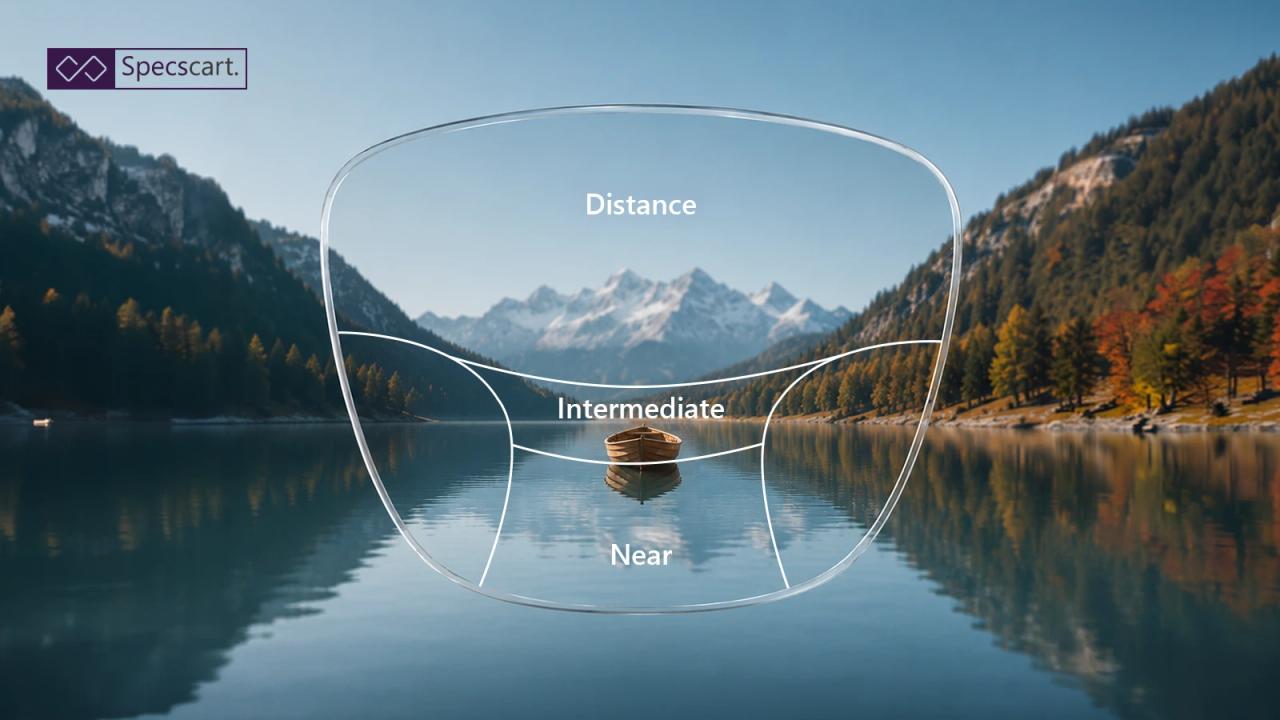
It also makes sense if you have difficulty at the middle/intermediate distance. The intermediate zone usually covers between 50cm and a meter away, like a computer screen, a car dashboard, or a supermarket shelf. Reading glasses are not designed to cover this distance. If you find yourself leaning forward toward your screen, tilting your head back to read through the bottom of your distance glasses, or having to take your glasses off entirely to see something at arm's length, that middle zone is where the gap is. Varifocal glasses cover all three distances, including near, intermediate, and distance vision.
Specific Signs Worth Taking Seriously
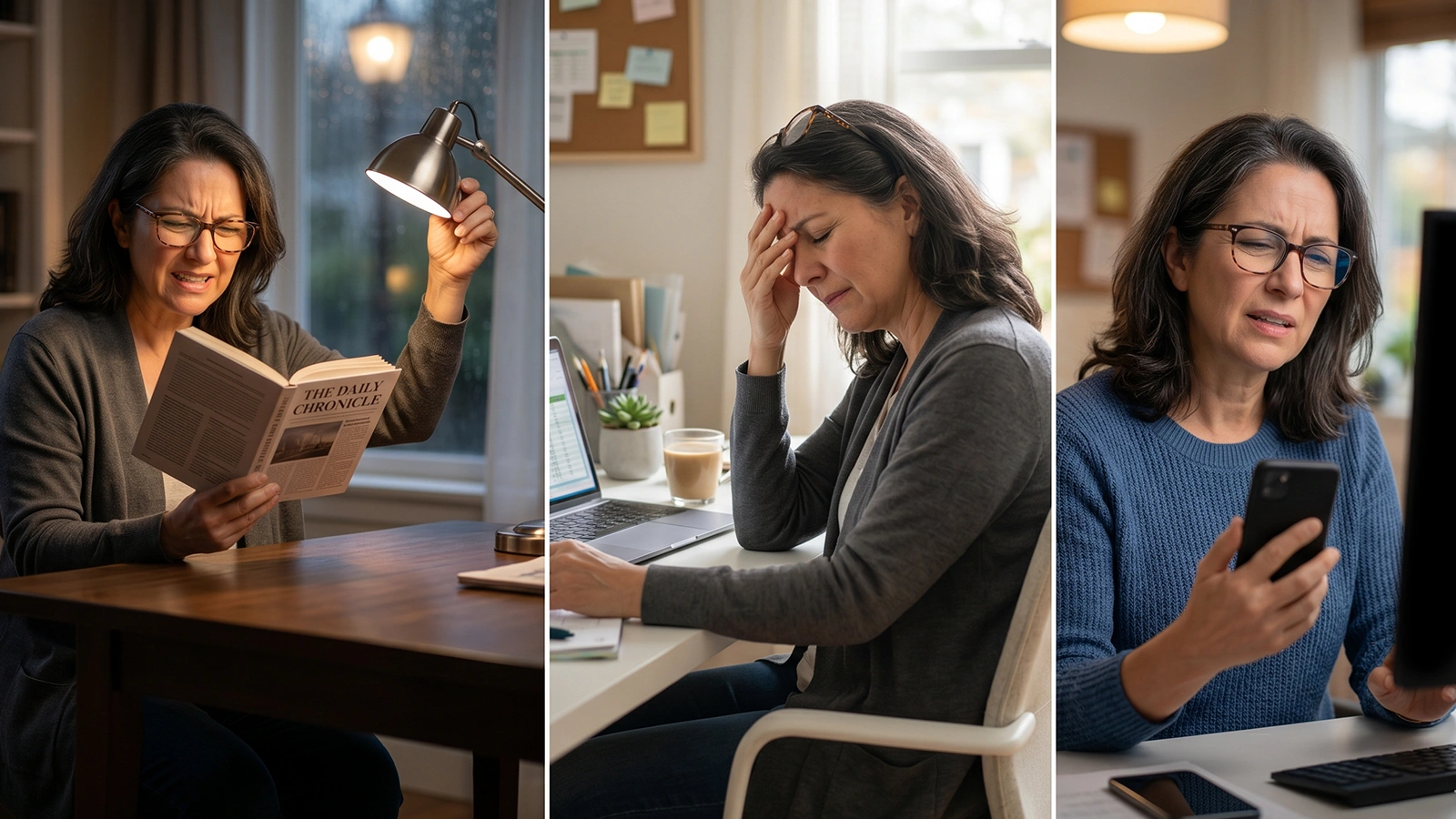
Needing More Light
There are some other signs that you should not ignore. If you constantly struggle to read in low-light situations and need extra light to read even normal-sized texts, it might be a concern. Examples of this can be using your phone torch to read a restaurant menu or pulling the lamp closer to read something that used to be fine in natural light earlier.
Frequent Headaches
When your eyes are straining to maintain focus across multiple distances throughout the day, the effort accumulates. If you experience regular frontal headaches, particularly after screen-heavy days, it can be a sign that your eyes need extra effort to focus at certain distances. Varifocal lenses correct vision across all distances, including intermediate distances, which reduces the effort for your eyes.
Your Glasses Don’t Feel Enough
If your current single-vision glasses are good enough for most tasks but you struggle to see clearly at certain distances, it’s because you need vision correction at multiple distances. In that case, you should go for an eye test even if your current prescription has not expired. A comprehensive eye test will help you understand if you need multifocal/varifocal lenses.
When Should You Consult an Optician?

There is no hard rule here that applies to everyone, but if you are facing one or more symptoms mentioned above, it’s worth consulting an optician. When your eyes are working without the right prescription support, they have to compensate. You have to squint to see clearly, muscles start to tighten, and you also need to adjust your posture. It doesn’t damage your eyes permanently, but they obviously make your eyes tire faster. You can also face complications like headaches or eye strain frequently.
A comprehensive eye test will confirm whether your prescription now spans multiple distances, and by how much. If the gap between your distance and reading prescription is significant, varifocals are almost always the more practical long-term choice. If it's mild, your optometrist might suggest starting with reading glasses and reviewing in a year. There is no fixed age when you should switch to varifocals, as it depends on your individual condition. However, when you start finding it difficult ot manage your daily life because you need vision correction at multiple distances, it’s time to consider varifocal lenses.
Caution: You may become style obsessed