




Dry eyes might sound like a small issue, but for millions of people, it’s a daily struggle that affects their comfort and vision. Some of the most common symptoms you’ll experience in case of dry eyes include a burning or stinging sensation in the eyes. Your eyes might feel tired, itchy, and watery.
It’s one of those conditions most people shrug off as a minor irritation. But if left unmanaged, it can impact your comfort, focus, and even vision quality. In this article, let’s take a closer look at dry eye syndrome.
What are Dry Eyes?
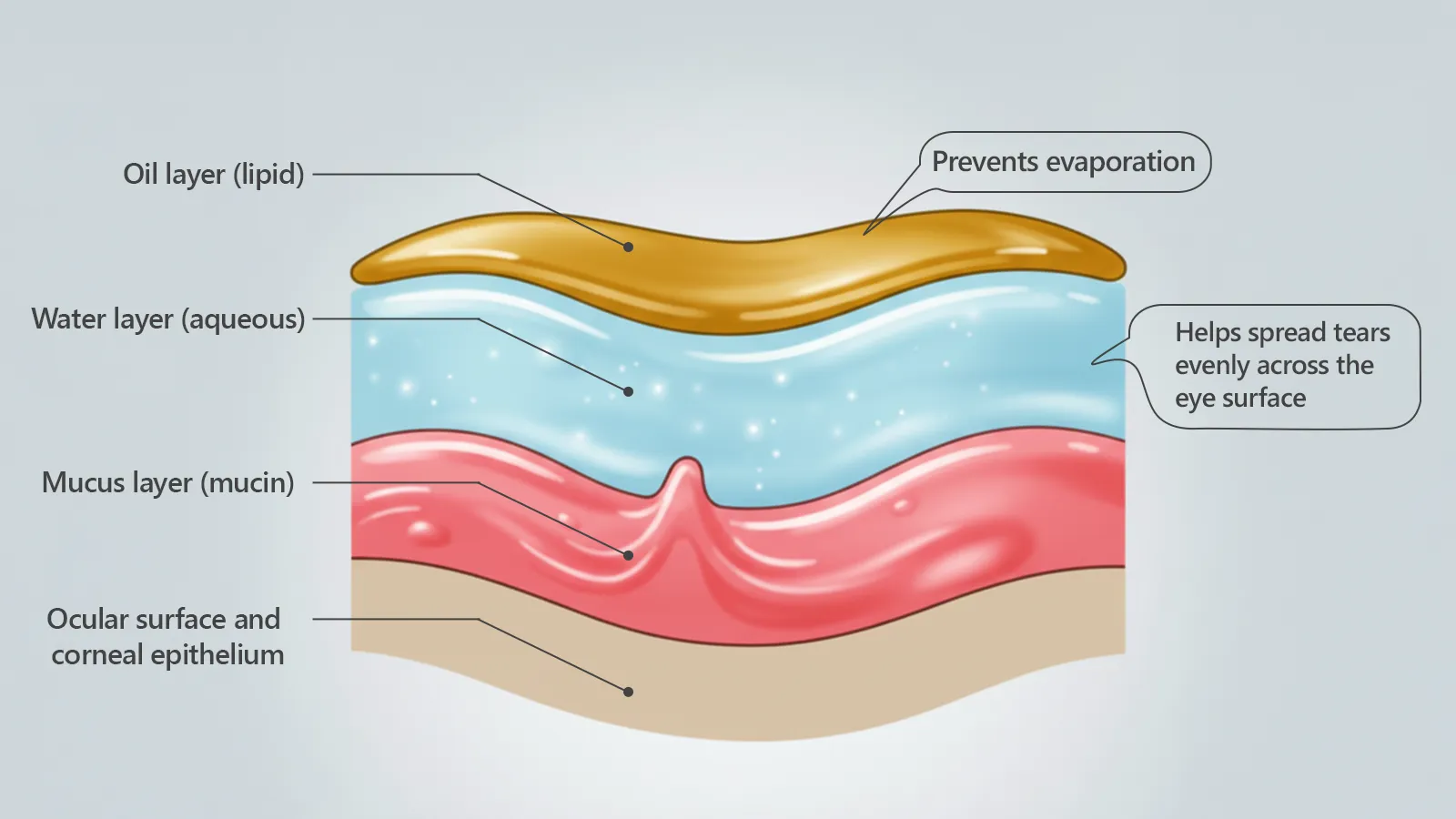
Dry eye is a condition in which either your eyes don’t produce enough tears or the tears evaporate too quickly. As a result, the eyes don’t get the required lubrication or moisture. Human eyes have a three-layer tear film that protects the eyes:
Oil layer (lipid): prevents evaporation.
Water layer (aqueous): keeps the eyes hydrated.
Mucus layer (mucin): helps spread tears evenly across the eye surface.
When any of these layers get out of balance, the eyes lose moisture faster than they can replace it. The condition leads to a dry, gritty and burning sensation in your eyes.
There can be two different types of dry eyes:
Aqueous-deficient dry eye: The eyes don’t produce enough watery tears.
Evaporative dry eye: Tears evaporate too quickly, often due to blocked oil glands in the eyelids (called Meibomian Gland Dysfunction or MGD).
Who is at Risk of Dry Eyes?

Dry eyes can affect anyone, but some people are naturally more prone to them.
Age: Tear production decreases with age, which makes dry eyes more common in people over 50.
Gender: Women, especially after menopause, are at higher risk due to hormonal changes.
Screen exposure: Staring at screens reduces blinking, and fewer blinks mean drier eyes.
Environment: Wind, smoke, air conditioning, and dry air can worsen symptoms.
Medical conditions: Autoimmune disorders like Sjögren’s syndrome, rheumatoid arthritis, and lupus can affect the tear glands.
Eye surgeries: LASIK or cataract surgery can temporarily reduce tear production.
Medications: Antihistamines, antidepressants, birth control pills, and some blood pressure medicines can trigger dryness.
Contact lenses: Long-term wear of contact lenses can disrupt the tear film.
Recognising the Symptoms of Dry Eyes
Dry eyes can show up in many forms, and they don’t always feel the same for everyone. Common symptoms include:
A stinging, burning, or gritty sensation.
Redness and irritation.
Light sensitivity.
Watery eyes (yes, overwatering is actually a symptom as your eyes overcompensate for dryness).
Blurry or fluctuating vision that clears up when you blink.
Eye fatigue, especially after screen time.
Difficulty wearing contact lenses.
If you notice any of these regularly, it’s best to get your eyes checked because chronic dryness can lead to more serious issues if left untreated.
Why Do Dry Eyes Happen?
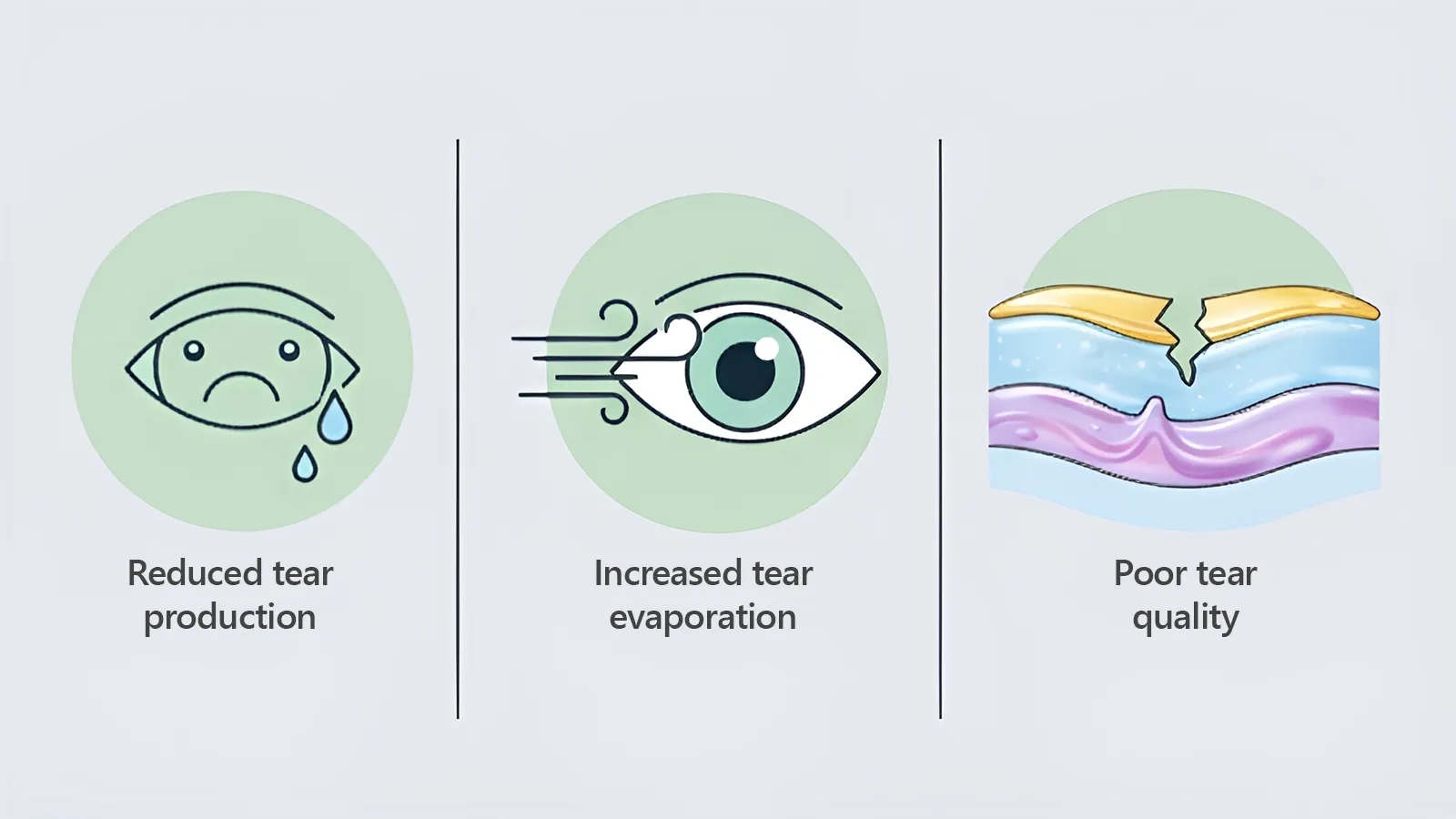
Dry eyes can result from multiple factors, from tear production problems to poor tear quality. Here are the main reasons:
Reduced tear production: Ageing, hormonal changes, or autoimmune diseases can affect your tear glands.
Increased tear evaporation: Blocked oil glands (MGD), incomplete blinking, or exposure to dry air can cause tears to evaporate too fast.
Imbalanced tear composition: When your tear film lacks the right mix of oil, water, and mucus, it can’t protect the eyes properly.
Eyelid problems: Conditions like entropion (inward-turning eyelid) or ectropion (outward-turning eyelid) can disrupt tear distribution.
Nerve sensitivity issues: Certain eye surgeries or injuries can reduce nerve sensitivity, which makes you blink less and hence cause drier eyes.
Medication side effects: Some medicines unintentionally reduce tear production or quality.
How are Dry Eyes Diagnosed?
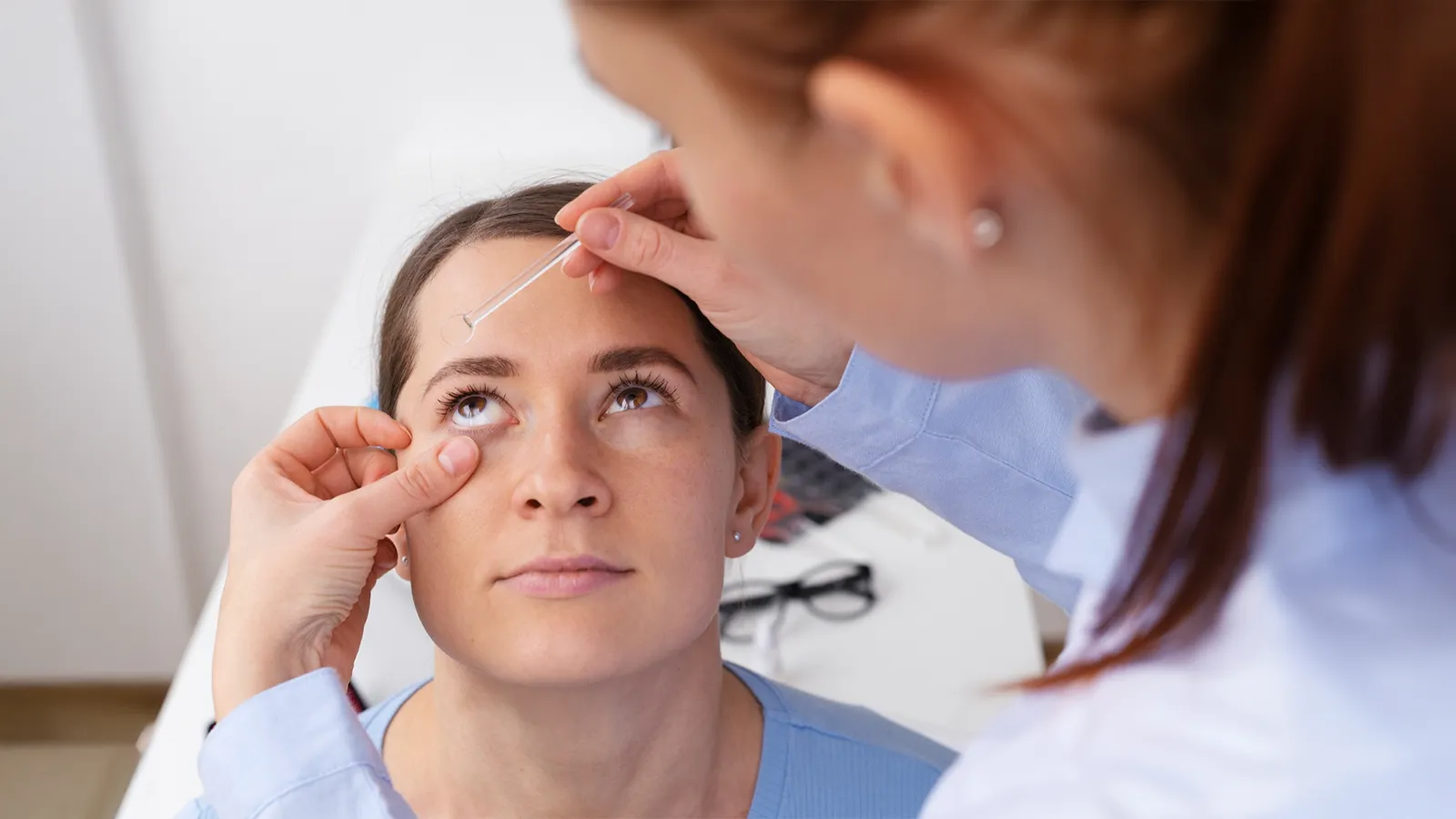
When you visit an optometrist or ophthalmologist, they don’t just look at your symptoms. They’ll often perform simple and painless tests to identify what’s happening:
Schirmer’s Test: Measures tear production by placing a small strip of paper under your eyelid.
Tear Break-Up Time (TBUT): Checks how long your tear film stays stable before breaking up.
Ocular Surface Staining: Uses a special dye to detect dry patches or damage.
Meibomian Gland Evaluation: Examines the eyelid glands responsible for oil secretion.
Blood Tests: Sometimes done if an autoimmune disease like Sjögren’s is suspected.
Diagnosis helps the specialist understand whether you have aqueous-deficient, evaporative, or mixed-type dry eye. They proceed with the treatment options accordingly.
Treatment for Dry Eye Syndrome
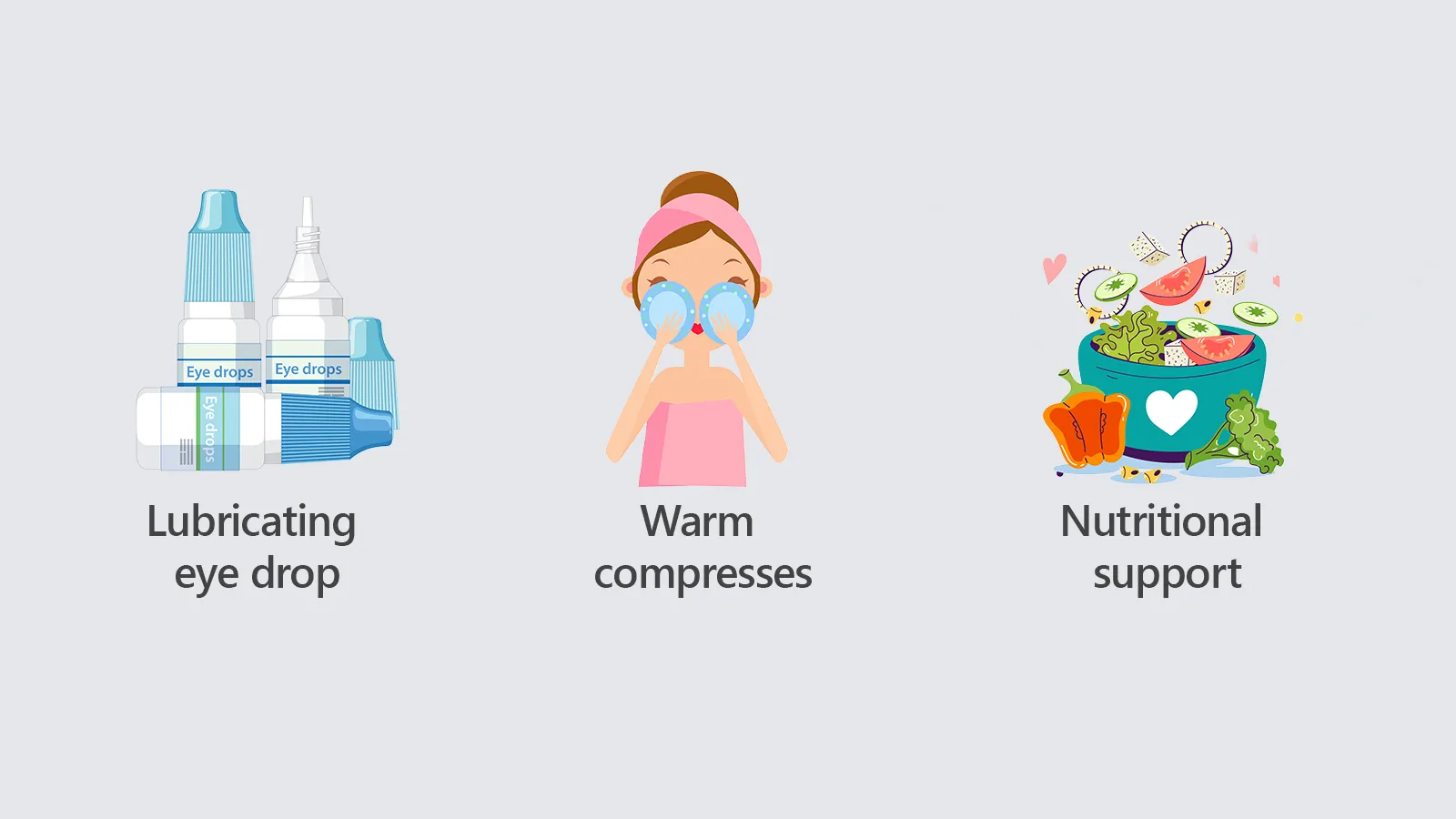
Dry eye can be effectively managed, but treatment depends on the underlying cause and severity of the condition.
1. Home remedies and lifestyle changes
For mild cases, lifestyle tweaks and regular eye care can make a huge difference:
Use artificial tears (preferably preservative-free for frequent use).
Apply warm compresses to open up blocked oil glands.
Blink consciously, especially during long hours on digital screens.
Follow the 20-20-20 rule: Every 20 minutes, look 20 feet away for 20 seconds.
Use a humidifier to keep indoor air moist.
Wear sunglasses outdoors to protect from the wind and the sun.
Stay hydrated and eat omega-3-rich foods (like flaxseeds or salmon).
2. Medical treatments
If self-care isn’t enough, your eye doctor might recommend:
Prescription eye drops: The doctor can recommend Cyclosporine (Restasis) or Lifitegrast (Xiidra) to reduce inflammation and improve tear production. They can also recommend Corticosteroid drops for short-term relief in severe cases.
Punctal plugs: These are tiny devices placed in the tear ducts to reduce tear drainage.
In-office treatments: You can go with options like lid hygiene therapies, like warm compress machines or Intense Pulsed Light (IPL) for Meibomian gland dysfunction.
Oral medications: The doctor can recommend low-dose antibiotics (like doxycycline) to reduce inflammation.
Autologous serum drops: These drops are made from your own blood serum and are used in case of severe or non-responsive cases.
3. Advanced and surgical options
For people whose dry eye symptoms remain severe even after using prescription drops and other non-surgical treatments, eye specialists may recommend more advanced procedures. These are usually reserved for cases where the cornea (the clear front surface of your eye) has become damaged or the natural tear system isn’t functioning properly.
Scleral lenses: Unlike regular contacts, they don’t sit directly on the cornea. Instead, they create a small, sealed reservoir of fluid between the lens and your eye surface to keep the cornea continuously hydrated. Ophthalmologists often suggest scleral lenses when dryness is so severe that regular eye drops or ointments no longer provide relief. They’re also particularly helpful for people with corneal irregularities or after certain eye surgeries.
Amniotic membrane grafts: In cases where the cornea is already damaged due to chronic dryness, amniotic membrane grafts may be used. This treatment involves placing a thin biological layer derived from the amniotic membrane of the placenta over the eye’s surface. It acts like a natural bandage to reduce inflammation and encourage the cornea to heal. Doctors generally recommend this option when persistent dryness has caused significant corneal injury or when other therapies haven’t restored the eye’s surface health.
Eyelid surgery: Sometimes, the problem lies not in the tears themselves but in the eyelids. Conditions like entropion (when the eyelid turns inward) or ectropion (when it turns outward) can disrupt the way tears spread or drain from the eyes. In such cases, eyelid surgery may be advised to correct the eyelid’s position. It ensures that tears stay evenly distributed across the eye’s surface. This kind of procedure is typically recommended by an ophthalmic plastic surgeon after careful evaluation.
How to Prevent Dry Eyes?
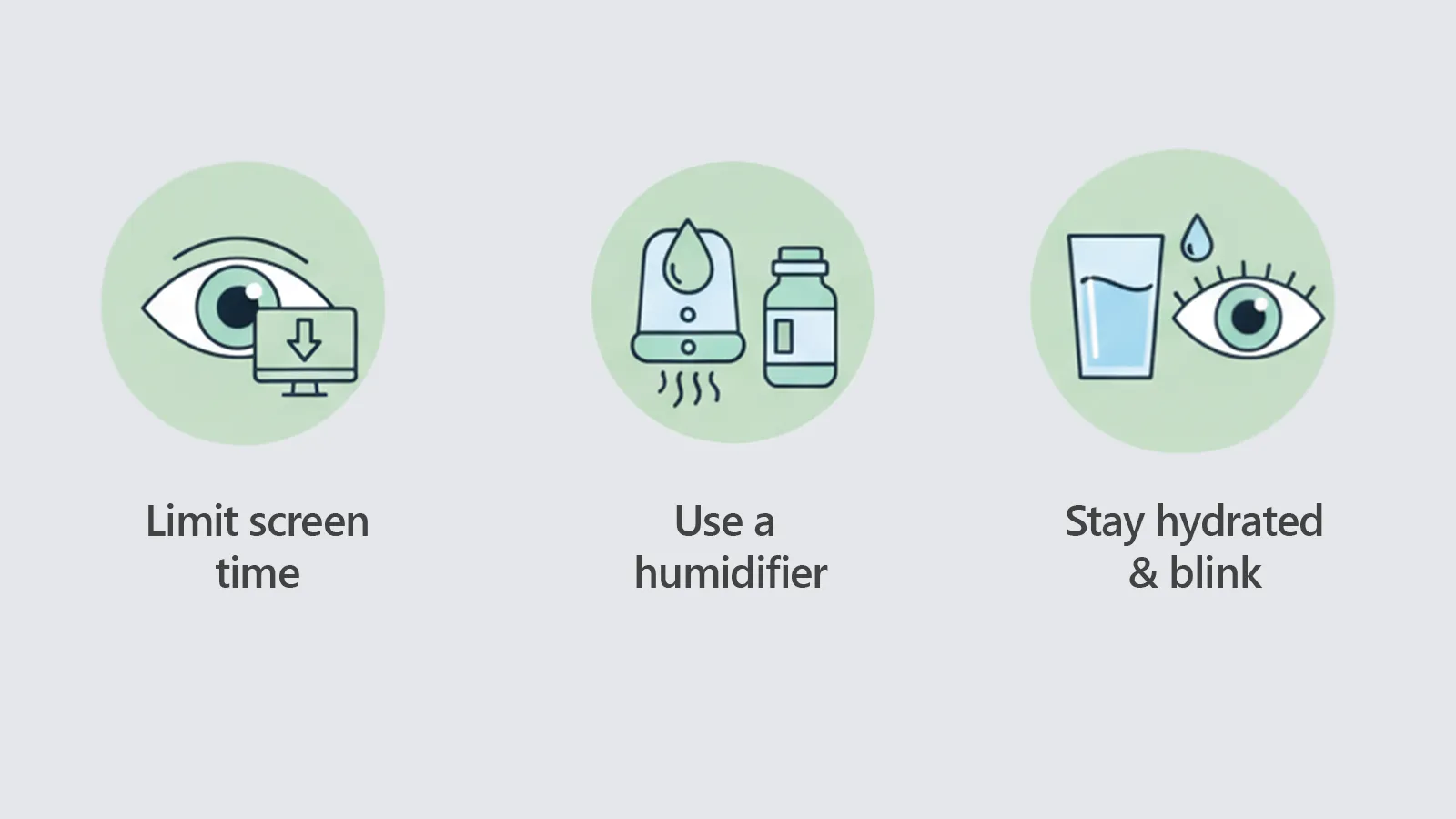
While dry eyes can’t always be prevented, adopting a few healthy habits can go a long way in keeping your eyes comfortable and well-lubricated. You can start by making a conscious effort to blink more often, especially when you’re focused on digital screens for long hours. Adjust your computer monitor so that it sits slightly below eye level. This helps reduce how wide your eyes stay open and prevents tears from evaporating too quickly. You should also switch to blue light filtering glasses to minimise the effect of digital eye strain, which can be one of the contributing factors for dry eyes. Additionally, make sure to follow the 20-20-20 rule, which means looking at something 20 feet away for 20 seconds every 20 minutes.
Staying hydrated throughout the day also plays a quiet but crucial role in maintaining tear balance. If you smoke, quitting can significantly improve not just your overall health but also your eye comfort, since smoke is a major irritant for the delicate eye surface. Try to avoid direct exposure to air from fans, air conditioners, or heaters, as they tend to dry out the eyes faster. Including omega-3-rich foods in your diet, such as flaxseeds, walnuts, and fish, can also help improve the quality of your tears. Whenever you’re outdoors, especially on windy or sunny days, you should make sure to carry your sunglasses that cover your eyes and offer 100% UV protection.
Possible Complications if Left Untreated
While dry eyes may seem like a minor irritation at first, leaving them untreated can gradually lead to more serious complications. Without enough natural lubrication, your eyes become more vulnerable to infections because tears help wash away dust, debris, and microorganisms. Over time, persistent dryness can damage the corneal surface, causing inflammation, scarring, or even painful ulcers that may affect your vision permanently. Many people also experience increased light sensitivity and a constant feeling of discomfort that interferes with daily tasks, reducing both focus and productivity.
That’s why it’s important not to ignore the early signs of dryness. If your symptoms persist or worsen, it’s best to schedule an eye test and get professional advice. With timely treatment, you can protect your vision and prevent long-term complications before they start.
Wrapping It Up
Dry eyes might be common, but you should not ignore the condition. With a few mindful habits and professional care when needed, you can keep your eyes comfortable, hydrated, and healthy. You should also make sure to have regular eye tests. The NHS recommends having an eye test every two years to detect any changes in your vision or any eye health-related concerns early on. For those who live in Manchester or the nearby area, you can book a free eye test at your nearest Specscart store.
Caution: You may become style obsessed