


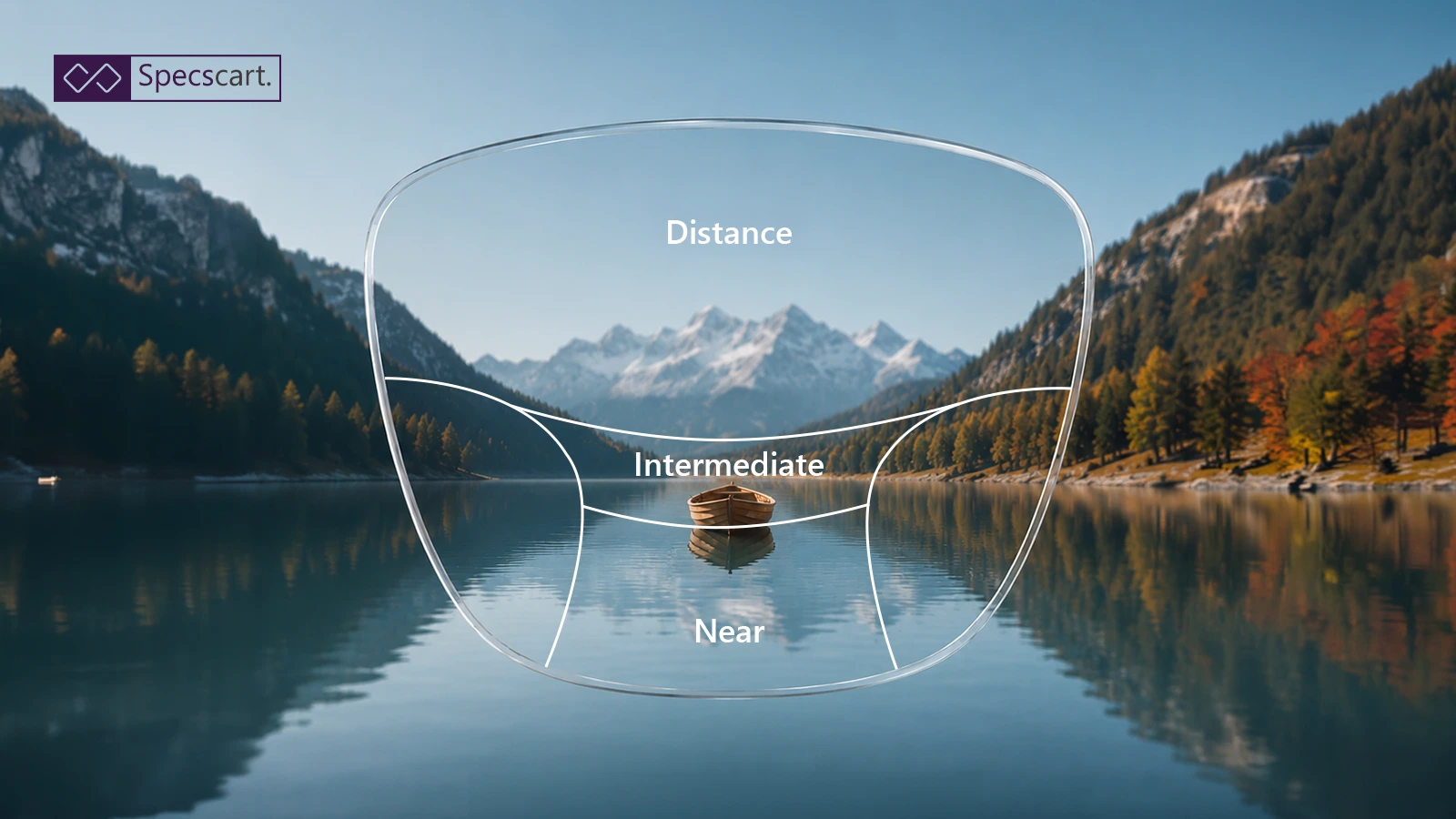

Varifocal lenses or progressive lenses are designed to help you see at any distance, including near, far, and everything in between. The top part helps you see things far away, like road signs or a TV screen. The middle part helps with arm's length tasks, like using a computer. The bottom part is for close-up work, like reading a book or checking your phone. However, what sets them apart from bifocal lenses is that there is no visible line separating the three different viewing zones. As a result, varifocal glasses look similar to regular prescription glasses.
How Varifocal Lenses Work?
A varifocal lens has a gradual change in power from top to bottom. The top section contains your distance prescription, the bottom has your reading prescription, and the middle section ensures a smooth transition. When you look straight ahead, you're using the distance zone. When you look down to read, you're using the near zone. Your eyes move naturally between them without you thinking about it.
Since varifocal lenses have to combine multiple prescriptions into a single lens without any visible lines, the surface of the lens has to change its curve from top to bottom. To ensure clear vision in the middle as well, the unwanted blur is pushed towards the side. That’s why it’s common to experience peripheral distortion in varifocal lenses, which is also called unwanted astigmatism.
However, advanced varifocal lenses are able to deal with it better. They are designed to offer a more comfortable visual experience by better aligning with how you naturally use your vision. Our varifocal lenses use your individual measurements and wearing preferences to optimise how each vision zone is positioned within the lens. It allows us to achieve a wider viewing area as the unwanted distortion is pushed further towards the outer edges.
As a result, you get wider and clearer viewing zones for each viewing distance. Since the usable area of the lens is larger, you don’t have to position your head as precisely to find the right focus. The edges feel less distorted, and the transition between different viewing distances also becomes far smoother compared to traditional varifocals. You can read our detailed guide on how varifocal lenses work for detailed information.
Who needs varifocal lenses?

Varifocals are designed for anyone who needs vision correction at multiple distances. Most people start needing them in their 40s or 50s, when their eyes become less flexible at switching focus between near and far. This condition is known as presbyopia, and it's a normal part of ageing that happens to most people eventually.
You'll know it's time to consider varifocals if you're holding your phone at arm's length to read texts, struggling with small print on menus or labels, or finding yourself constantly swapping between different pairs of glasses. Perhaps you already wear glasses for distance, but now close-up tasks have become frustrating. Or maybe you're taking your glasses on and off throughout the day, depending on what you're doing. If any of this sounds familiar to you, varifocal glasses will make your life easier. Instead of carrying multiple pairs or squinting through tasks, one pair handles everything.
Benefits of Varifocal Glasses
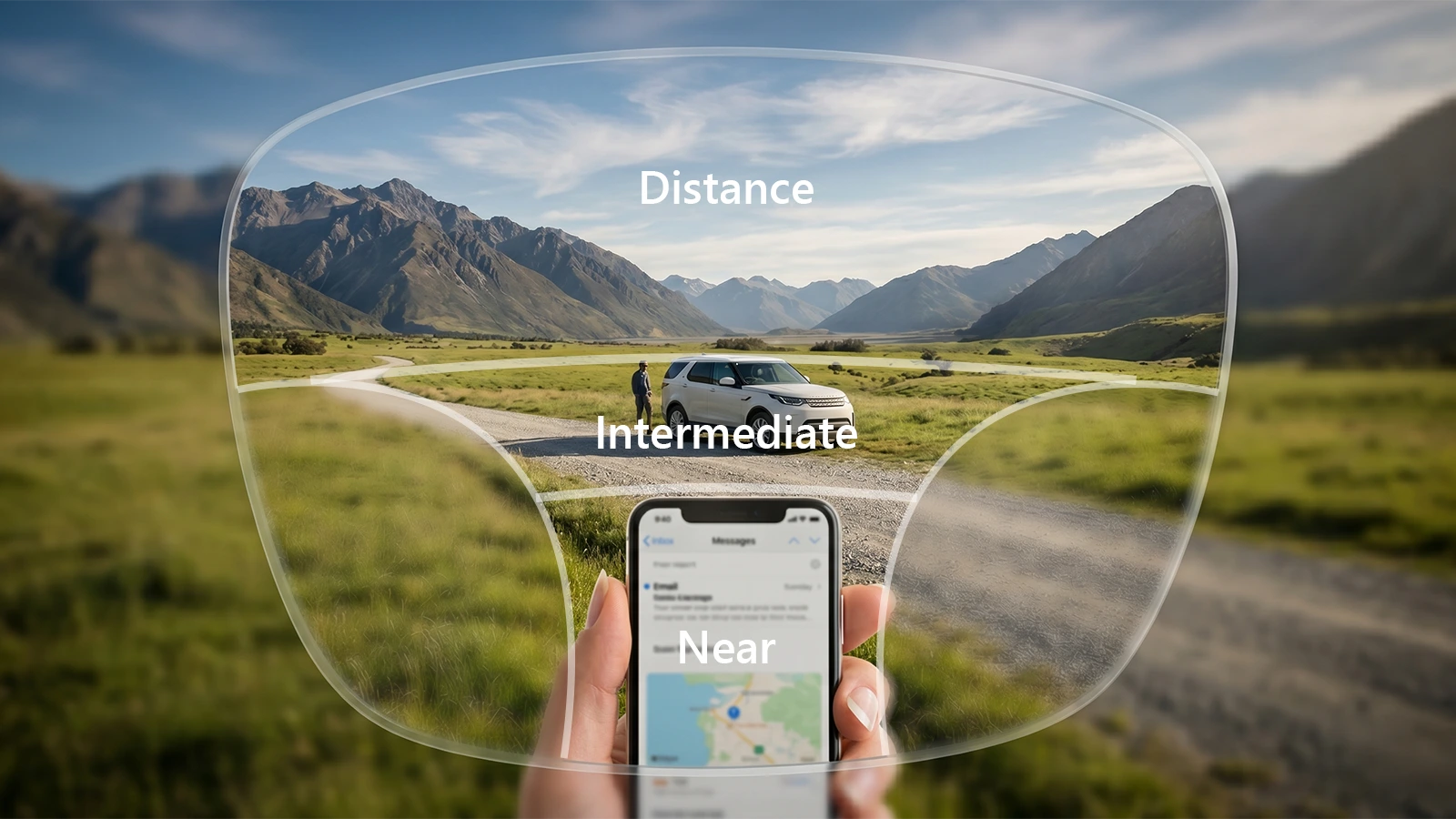
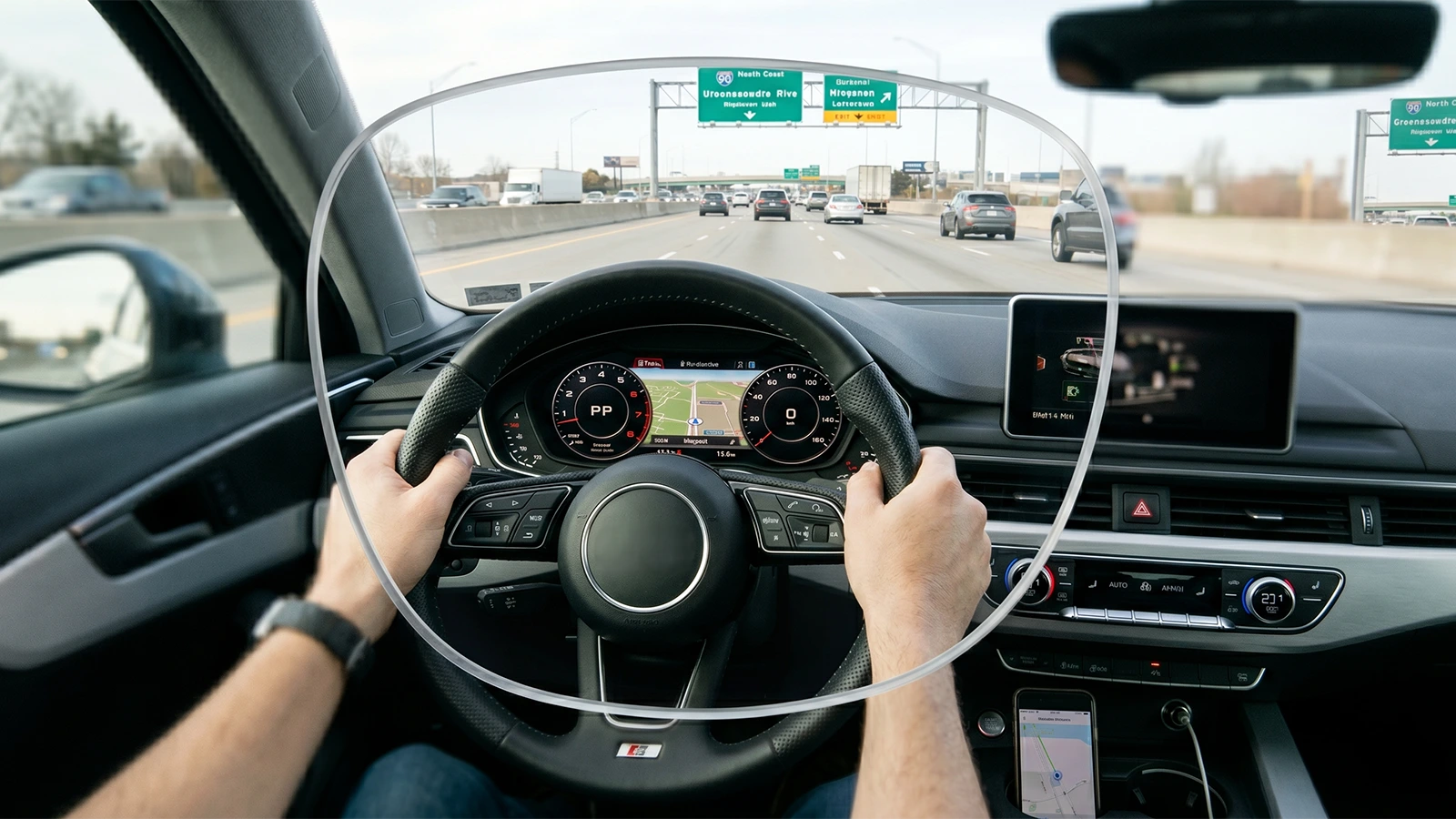
The most obvious benefit of varifocal glasses is simplicity. You wear one pair of glasses all day instead of switching between multiple pairs or searching for your reading glasses every time you need them. You can drive, work at your desk, check your phone, and read a book without taking your glasses on or off. Everything you need is already there. They also look like regular glasses. There are no visible lines or segments on the lens, so nobody can tell you're wearing varifocals unless you mention it. They're discreet and work with any frame style you like.
For your eyes, varifocals provide seamless correction across all distances. That middle zone is particularly useful for everyday tasks like using a laptop, cooking, looking at your car dashboard, or things that aren't quite near or far. Bifocals miss this entirely, which is why many people find varifocals more comfortable for modern life, where we're constantly looking at screens and objects at varying distances. You can check out the difference between varifocals and bifocals for a better understanding.
Potential Drawbacks of Varifocal Lenses

One drawback of varifocal lenses that most people have to face is the adjustment period. For the first few days or even a couple of weeks, you might feel slightly off-balance or notice the edges of the lens seem blurry. The peripheral areas of the lens can feel distorted. The usable viewing zones are in the centre, and if you try to look through the sides of the lens, things might appear slightly warped. You naturally learn to turn your head rather than just moving your eyes, which solves this.
However, this is completely normal. Your brain is learning to use different parts of the lens for different tasks. Simultaneously, your body is adjusting to moving your head more and your eyes less when shifting focus.
It’s like driving a manual car. When you start driving, you have to be conscious about shifting gears each time. However, after driving for a while, your muscle memory takes over, and everything happens smoothly without even realising. In the same manner, you get fully comfortable with varifocal lenses within a week or two.
How to Adjust to Varifocal Glasses?

Adjusting to varifocal glasses is easier if you know what to expect and give yourself a bit of time. Here's how to make it as smooth as possible.
You should wear the new varifocal glasses constantly from the start. Your brain needs regular practice to learn which part of the lens to use for different tasks. If you only wear your varifocals occasionally, you're resetting the learning process each time. Put them on in the morning and keep them on throughout the day, even if it feels strange at first.
Start at home rather than jumping straight into challenging situations. Spend the first day or two wearing them while doing everyday things like reading, watching TV, or moving around the house. This gives you time to get used to them in a familiar, low-pressure environment before wearing them to work or while driving.
How Varifocal Lenses Are Measured & Fitted?
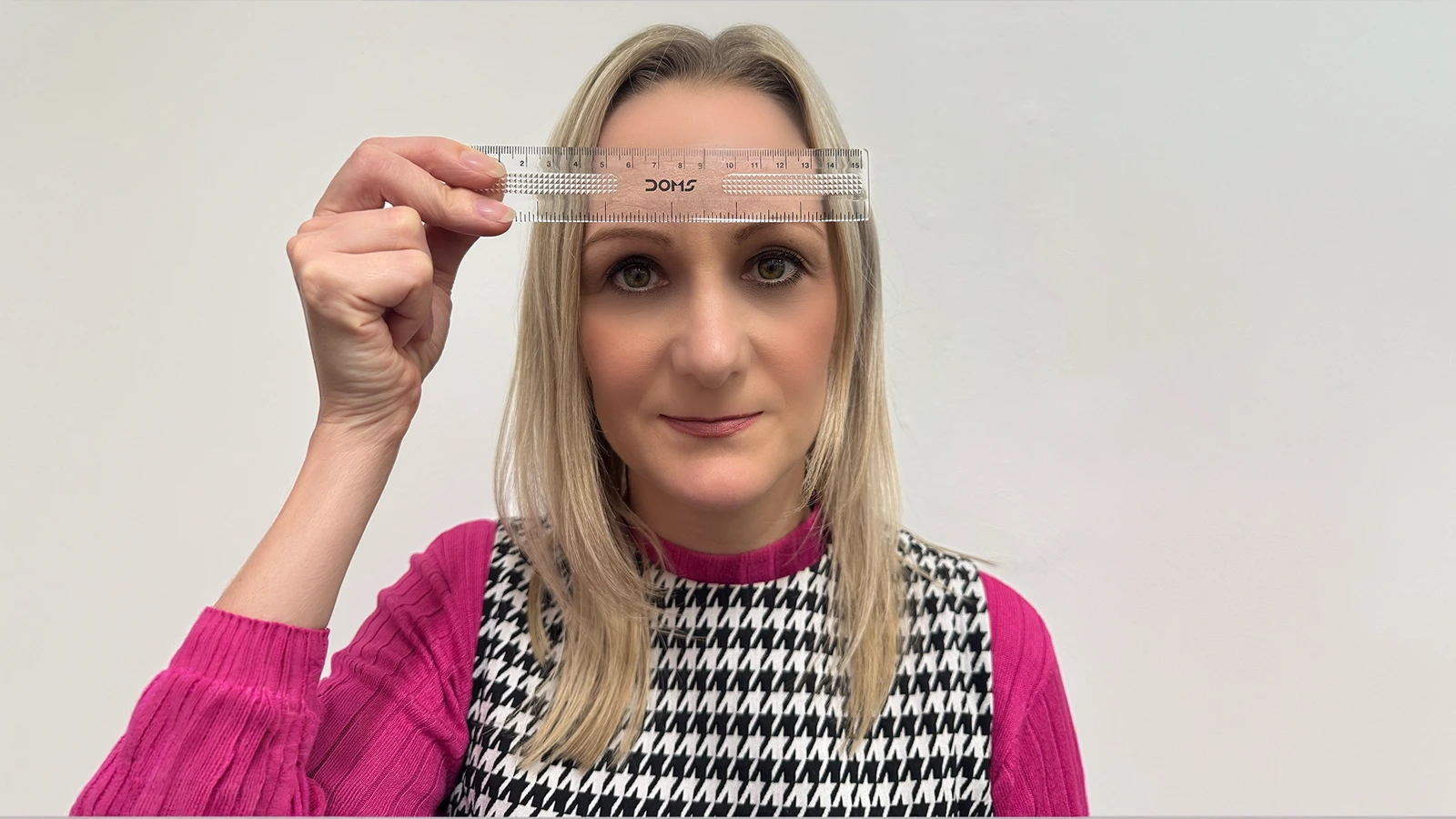
Getting varifocals right depends on accurate measurements. Unlike single vision lenses, where the prescription does most of the work, varifocals need to be positioned precisely in front of your eyes. A few millimetres off can affect how comfortably they work, which is why the fitting process matters.
First comes measuring your pupillary distance, or PD. This is the distance between the centres of your pupils, measured in millimetres. It tells the lab where to position the optical centre of each lens so it aligns with your natural line of sight. If this is off, even slightly, you'll be looking through the wrong part of the lens. It obviously won't feel comfortable.
Equally important is the fitting height. This measures where your pupil sits in relation to the bottom of the frame when you're looking straight ahead. Varifocals are designed with the distance zone at the top and the reading zone at the bottom, so the lens needs to sit at exactly the right height for your eyes. We take a photo of you in your chosen frame for measurements because different frame sizes and shapes change where the lens sits on your face.
Since our varifocals use Digital Ray-Path Technology, all these measurements feed into a lens that's calculated specifically for how you see and move. The precision of the fitting process ensures the technology works as it should, giving you the widest and clearest viewing zones possible.
Varifocal Lenses at Specscart
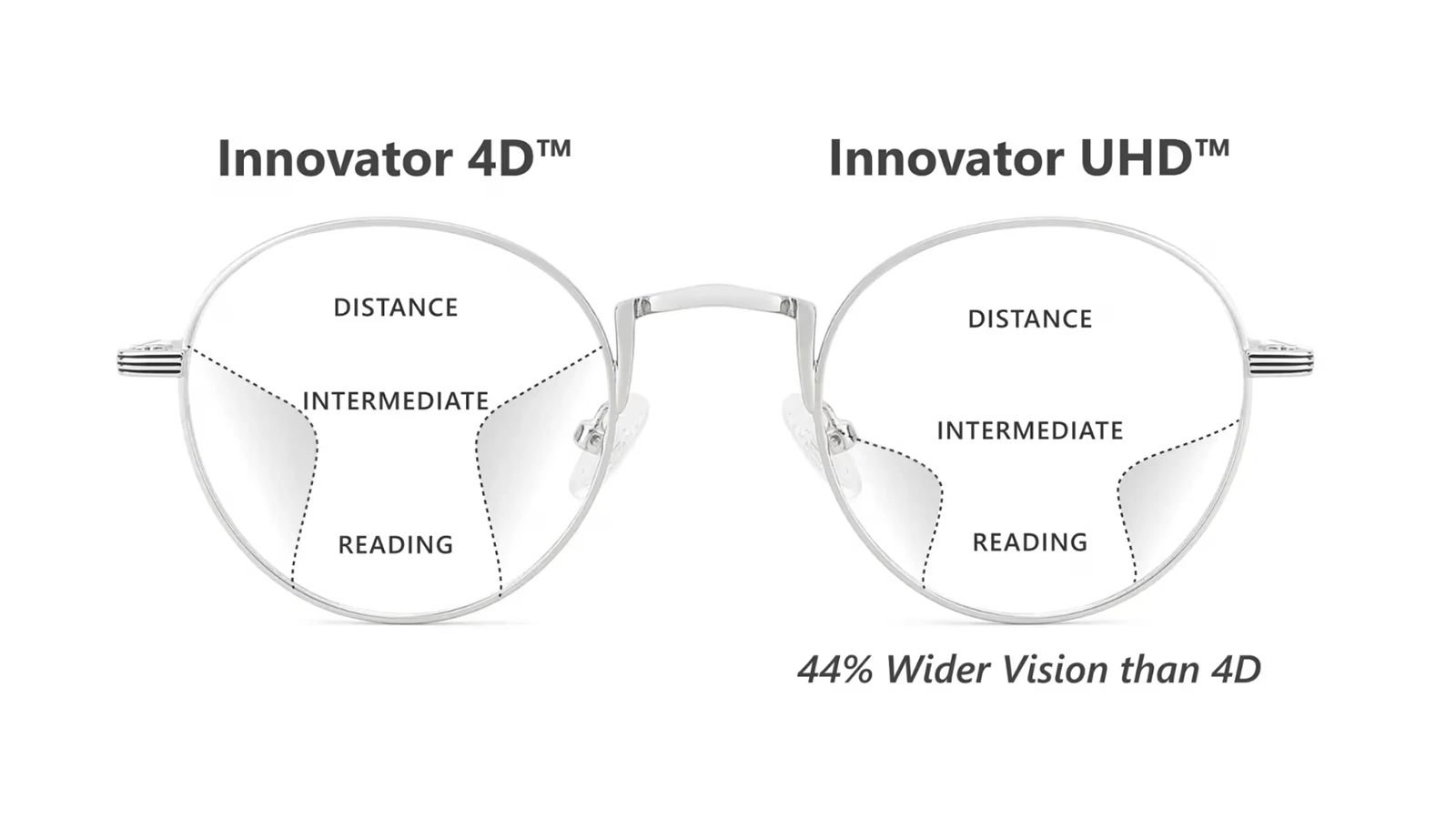
We offer two types of varifocal lenses, both tailored to give you a smooth and comfortable viewing experience. The difference completely depends on your lifestyle needs and how much comfort you want across different situations.
Innovator 4D is our standard varifocal lens, even though calling it “standard” undersells it. As mentioned above, the lens is customised for your vision. This means wider viewing zones and a smoother transition between distances. If you're wearing varifocals day to day for reading, computer work, and general activities, this lens handles it comfortably. It's designed to be easy to adapt to, so if you're new to varifocals, this is where most people start.
Innovator UHD takes things further. It uses Digi-Contour Technology and an Aberration Filter System, which reduces the blurriness at the edges of the lens even more. The viewing zones are even wider, and the lens itself is thinner, so it looks better in frames. This lens is a great choice for people who need their glasses to perform consistently over long periods, like driving for hours or working at a screen all day. If you're particularly sensitive to distortion or you've struggled with varifocals before, this lens makes the experience noticeably smoother.
| Specscart’s Varifocals | Innovator 4D | Innovator UHD |
|---|---|---|
| Price | £84 | £125 |
| Viewing Zones | Wider than traditional varifocals | Widest in the range |
| Edge distortion | Minimal | Ultra-minimal |
| Lens thickness | Standard | Thinner |
| Adaptation time | Faster than traditional varifocals | Fastest (especially for first-time wearers) |
| Best for | Everyday use Reading Computer work General activities | Driving Sports Active lifestyle |
| Included coatings | Anti-glare Anti-UV Anti-scratch Impact-resistant | Anti-glare Anti-UV Anti-scratch Impact-resistant |
Both lenses come with anti-glare, anti-UV, anti-scratch, and impact-resistant coatings as standard. You don't pay extra for these. Those who need blue light filtering for screen use that's available as an add-on.
Busting Common Varifocal Myths
“They make you dizzy”
This myth about varifocals comes from the adjustment period, which is real but temporary. As explained above, when you wear varifocals for the first time, your brain is learning to use different parts of the lens for different tasks. For a few days, this can feel strange. Some people notice a slight sense of imbalance or find the edges of the lens distracting. But this isn't the lens making you dizzy, it's your brain adapting to a new way of seeing. Most people adjust within a week. By two weeks, the feeling is gone entirely.
“They're only for old people”
Varifocals are for anyone who needs vision correction at multiple distances. Yes, presbyopia typically starts in your 40s, which is when most people begin needing them. But needing reading glasses in your 40s doesn't make you old. It makes you human. Your eyes are doing what every pair of eyes does as they age. Varifocals also aren't visibly different from regular glasses. There are no lines, no giveaway features. They look like any other pair of glasses, and they work with any frame style. The idea that they're "for old people" is outdated, mostly left over from the days of obvious bifocal lines. Now, they're just practical glasses for people who want clear vision at all distances without carrying multiple pairs around.
“They’re too expensive”
Varifocals do cost more than single vision lenses because the design and manufacturing process is more complex. But you're replacing at least two pairs of glasses with one. If you were buying separate reading glasses and distance glasses, the cost adds up quickly, and you'd still be switching between them all day.
At Specscart, our Innovator 4D varifocals start at £84, which includes all the premium protective coatings. That's less than many high street opticians charge for single vision lenses with necessary coatings. Our Innovator UHD is £125, and again, all coatings are included. For what you're getting, the price is more than reasonable, especially when you consider that one pair handles everything.
Care & Maintenance
Use a microfibre cloth and lens cleaner, or just warm water and a drop of gentle washing liquid. Rinse the lenses under lukewarm water first to remove any dust or grit, then clean gently with the microfibre cloth. Don't use your shirt, tissue, or kitchen roll because these can scratch the coating over time. Varifocals have multiple zones across the lens, so keeping the surface clear matters more than it does with single vision lenses. Smudges or scratches in the wrong place can interfere with how well you see through different parts of the lens.
When you're not wearing your glasses, put them in a case. Varifocals tend to be the pair you wear all day, which means they're more likely to get left on a table, tossed in a bag, or knocked off a bedside cabinet. A hard case protects the lenses and keeps the frame from getting bent. If the frame shifts even slightly out of alignment, it can affect how the lens sits in front of your eyes. Again, it matters more with varifocals than with other lenses.
Tu Sum It Up
Varifocals solve a very straightforward problem by offering seamless vision across different distances. They remove the inconvenience of carrying multiple pairs of glasses. The technology has improved significantly in the last few years, which has made it even more convenient and seamless. Varifocal glasses are worth considering if you need a single pair of glasses that can cover all your prescription needs with utmost comfort.
Caution: You may become style obsessed